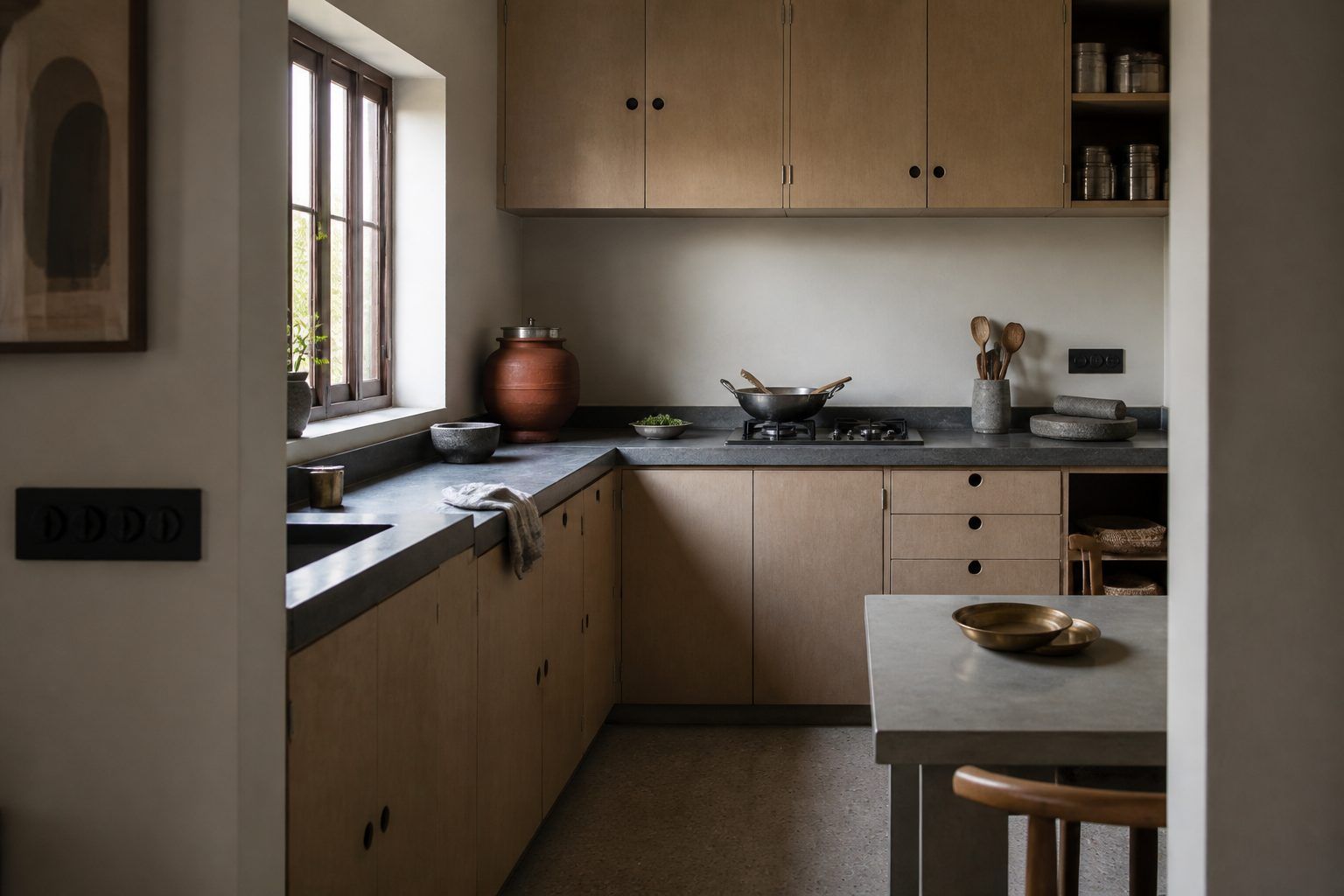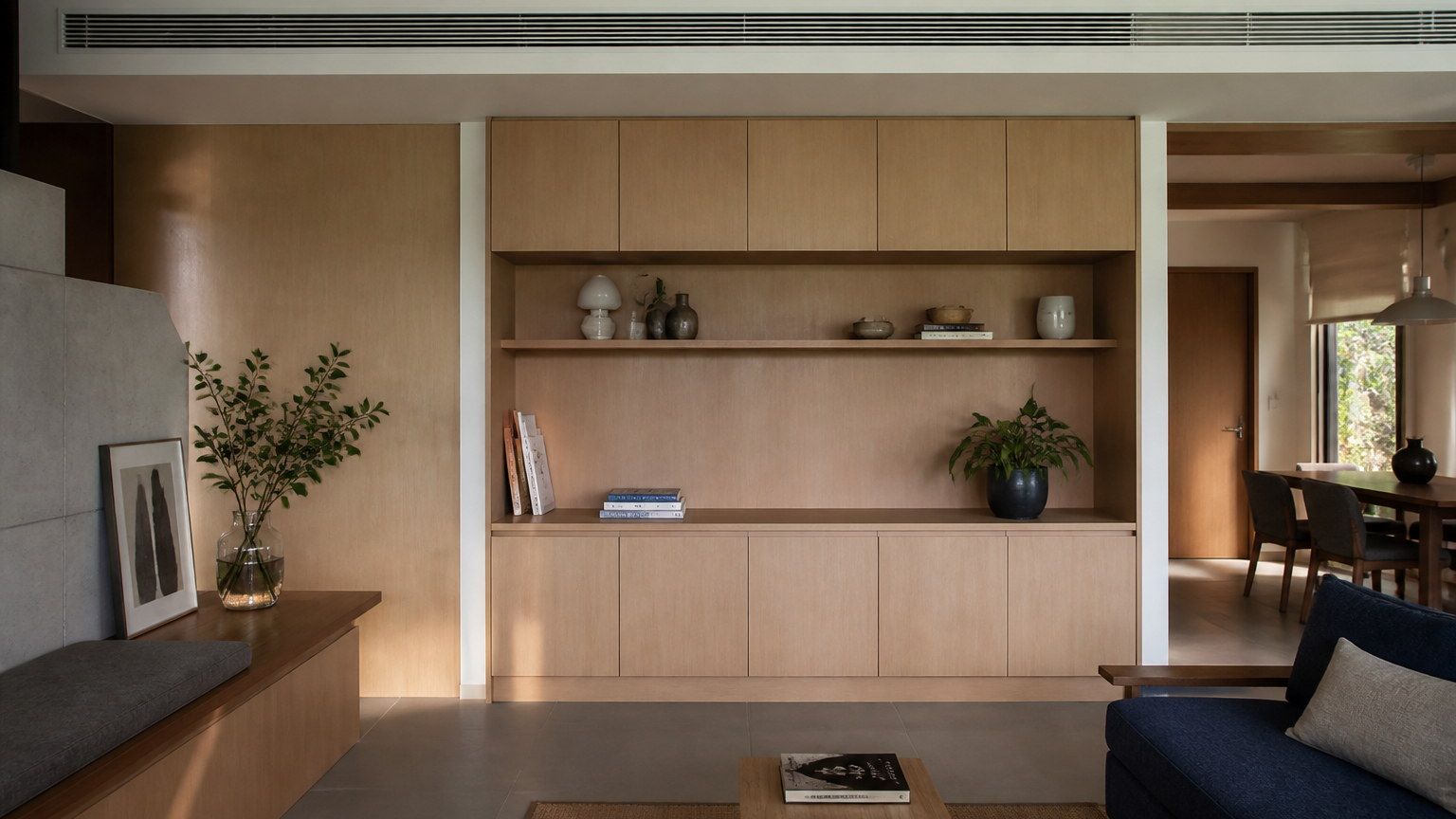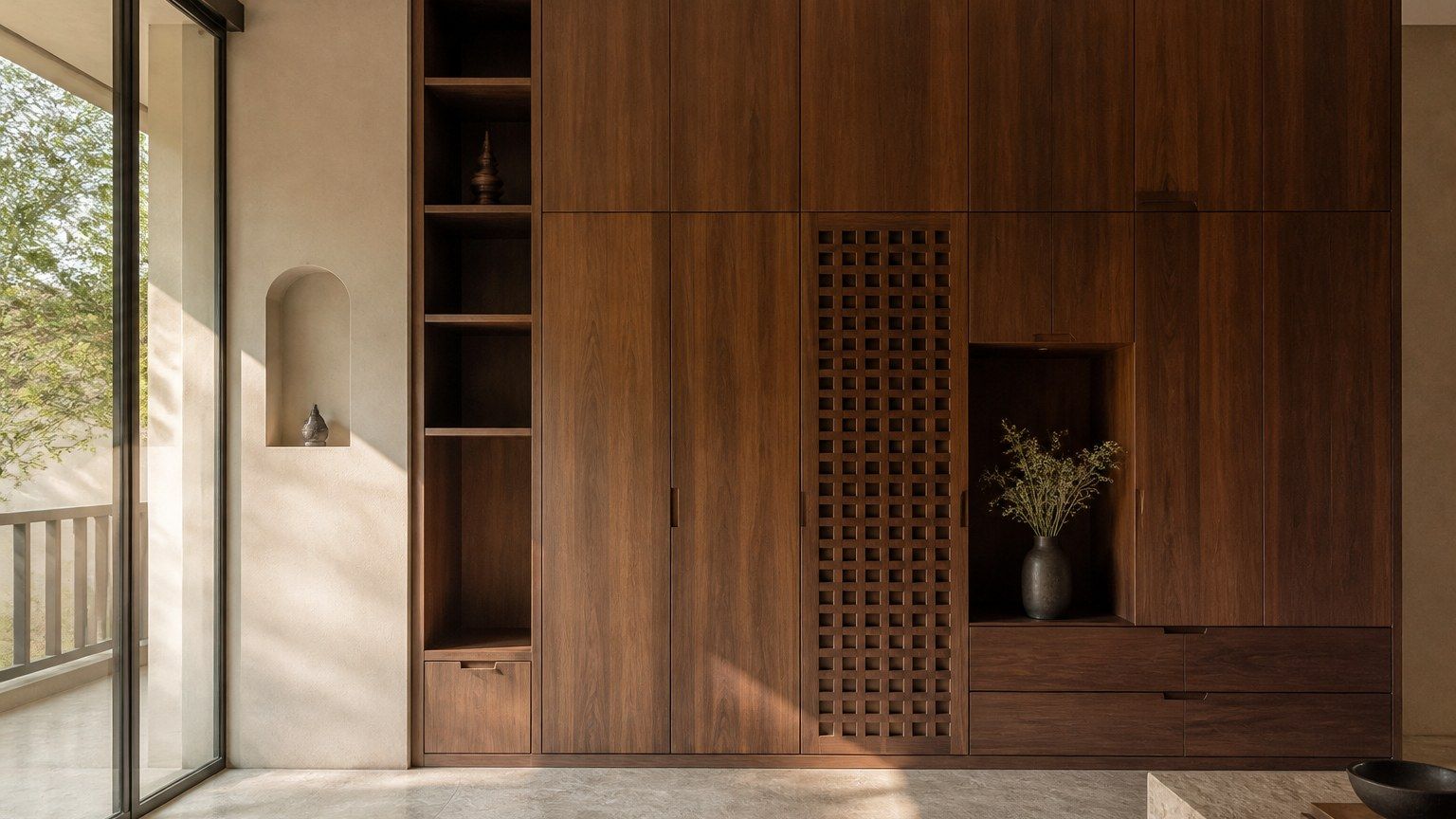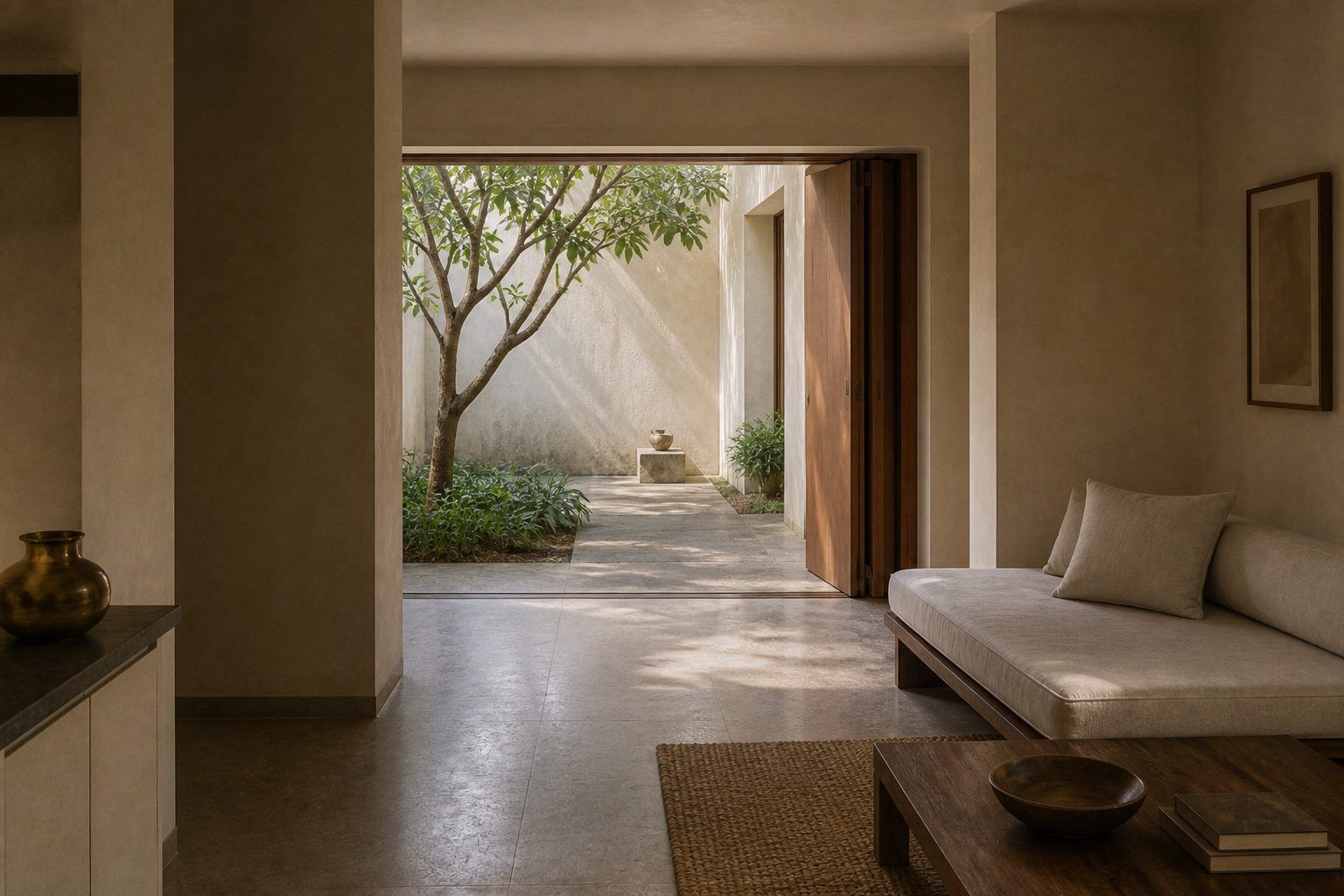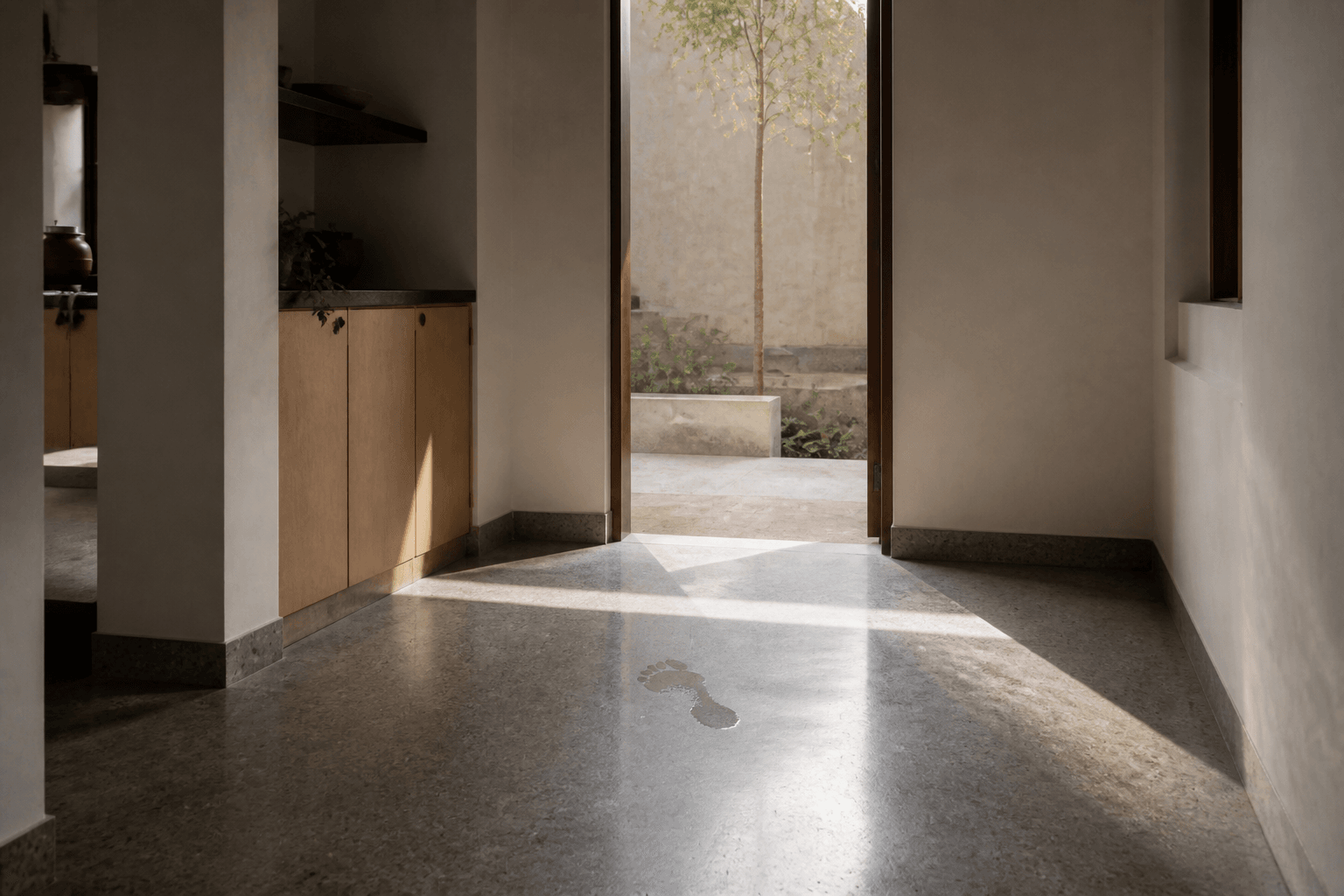
The floor is already at work before anyone calls it a finish.
Most flooring pages begin with a look. Marble or wood. Large format or herringbone. A shade that will photograph well. Those choices are not nothing. They are not the first decision in an Indian house.
The first decision is what the floor will be asked to take. Sand from the street. Water from a washed courtyard. Oil from a kitchen that opens to the dining room. A chair dragged every evening. A house that is lived in with shoes off still has grit. If the floor cannot take that, the look will last a season and the specification will be replaced.
This is not a buying guide, and it is not a kitchen essay. Worktops and shutters have their own page. Here the question is narrower: can the floor of the house be walked, washed and repaired, and still look like itself.
A floor that photographs well and fails in the monsoon was never specified. It was styled.
Climate before catalogue
Indian houses are wet and dusty in the same year. A floor that cannot be mopped will be abandoned. A floor that shows every drop will be hated. Cooling underfoot in April is not a luxury argument; it is why stone and some tiles still earn their place when a timber look is being sold as warmth.
Daylight is as decisive as water. A high-gloss slab in a south-facing room will record every smear. A very dark floor in a dim apartment will swallow the room. The plan has to place the threshold, the wet work and the sitting room in a relationship the floor can survive — not only in a relationship that looks open.
What the room is asking
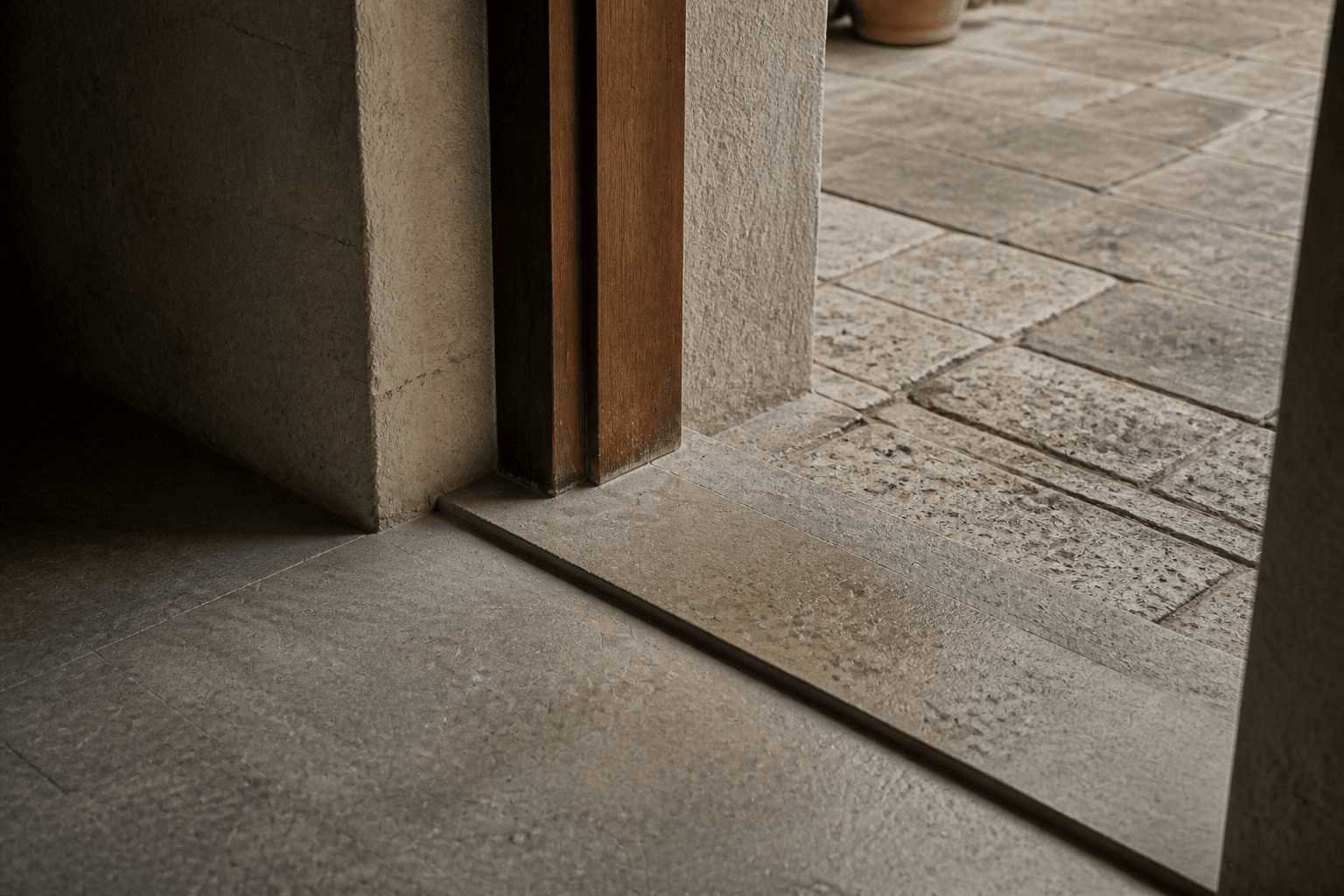
A wet kitchen edge, a bath, an entry from the street, and a quiet bedroom are not the same floor. One house can still have one language. It should not have one specification copied from the living-room mood board into the wet work.
Honed granite, good vitrified tile, and some compact stones earn their place because they can be cleaned and do not ask to be treated like jewellery. Polished marble can belong in a house; it is a poor wet-work surface next to turmeric, lemon and a mop that will be used daily. Timber and timber-look planks can belong in a dry, shaded room. They are a poor answer to a courtyard that is washed every morning.
There is not a winner. There is a set of behaviours: slip when wet, stain, movement, repair, and whether a replacement tile or slab can still be found in five years. A beautiful floor with no spare piece in the store is a future patch.
Junctions, not brand names
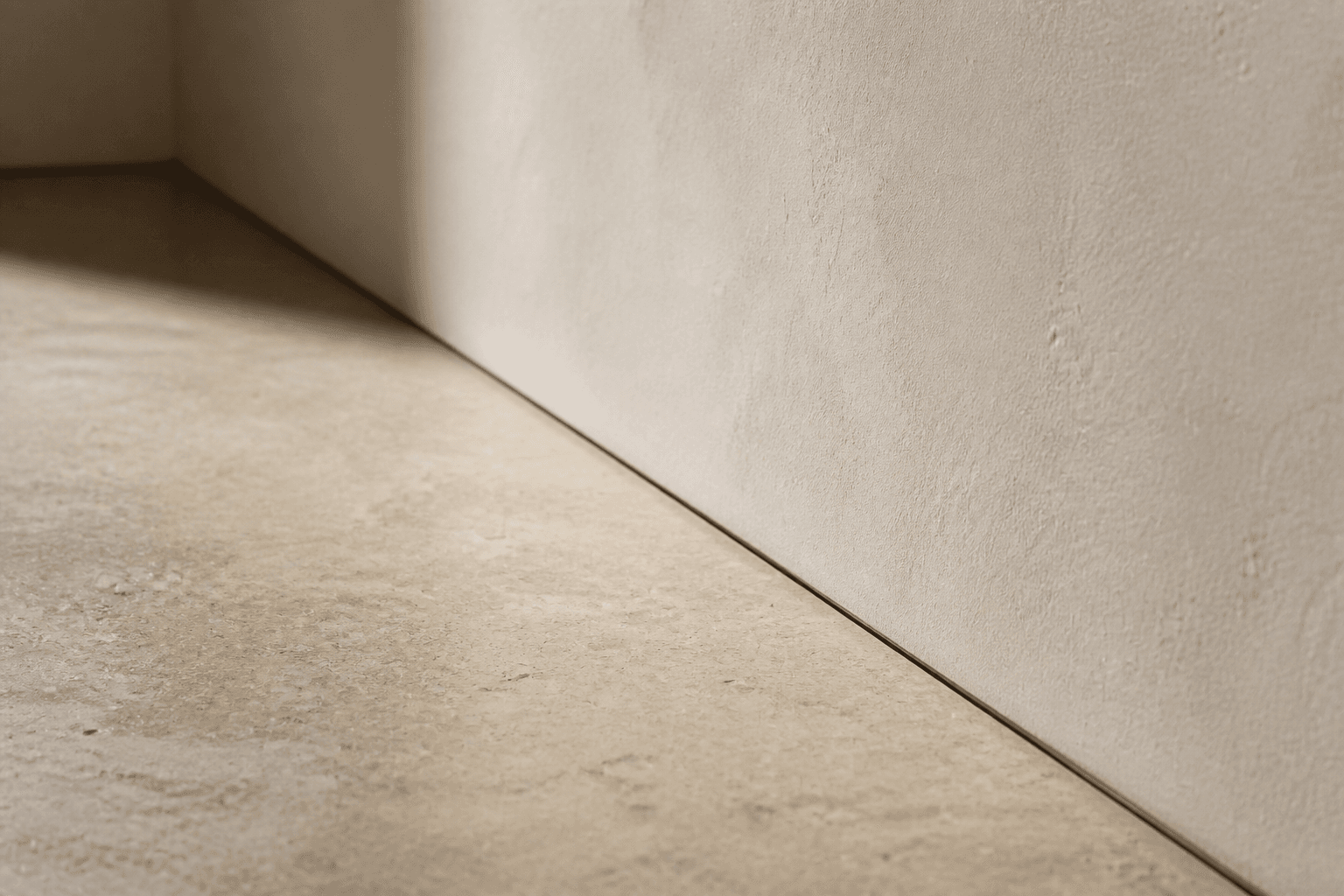
The skirting, the threshold and the wet-to-dry change do more work than the finish name. A cheap trim that lifts will be remembered as the floor. A step that holds water will be remembered as the floor. A grout that cannot be cleaned will be remembered as the floor.
This is neighbouring to millwork and to the kitchen as a climate room. It is not the same essay. The floor is the largest surface in the house. If it is asking to be treated gently, the house will be lived against it.
What this page is not
It is not a pet-product page, and it is not a vendor catalogue. Those already exist on the old site; they do not become a second Journal essay. Animals that live in a house are a later planning question. They are not an excuse to publish a flooring brand list.
It is not Indian Kitchen Specification, not The Silent Pollutant, and not Sustainability Through Design Longevity. Boards, emissions and whether a fit-out should last twenty years remain their own arguments. This page is only about the walking surface.
Closing thought
Specify the floor as if it will be washed and kept. The look can follow. When the threshold, the wet work and the sitting room are honest, the house has less need to announce its finishes.
The lasting floor is the one whose specification can be cleaned.