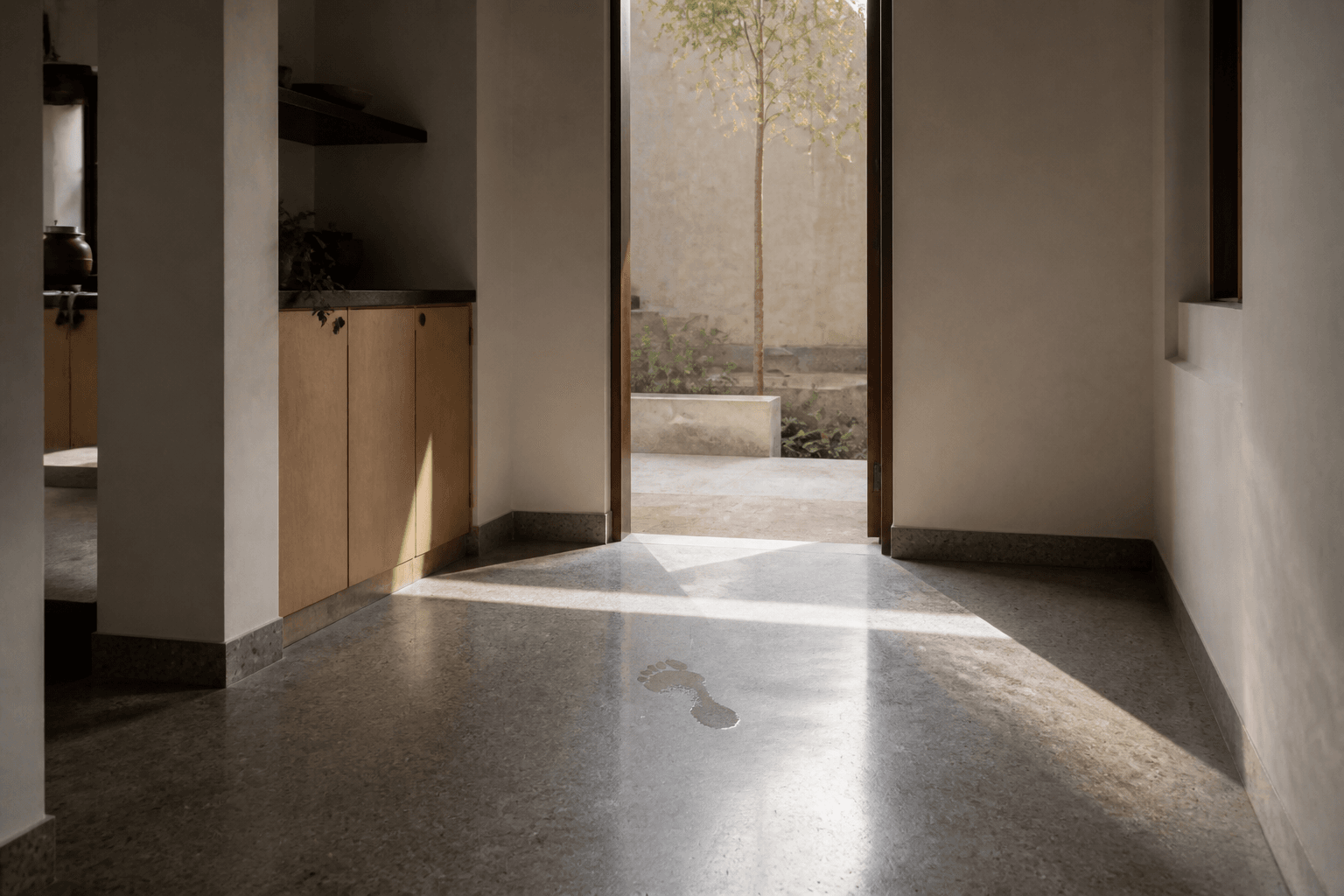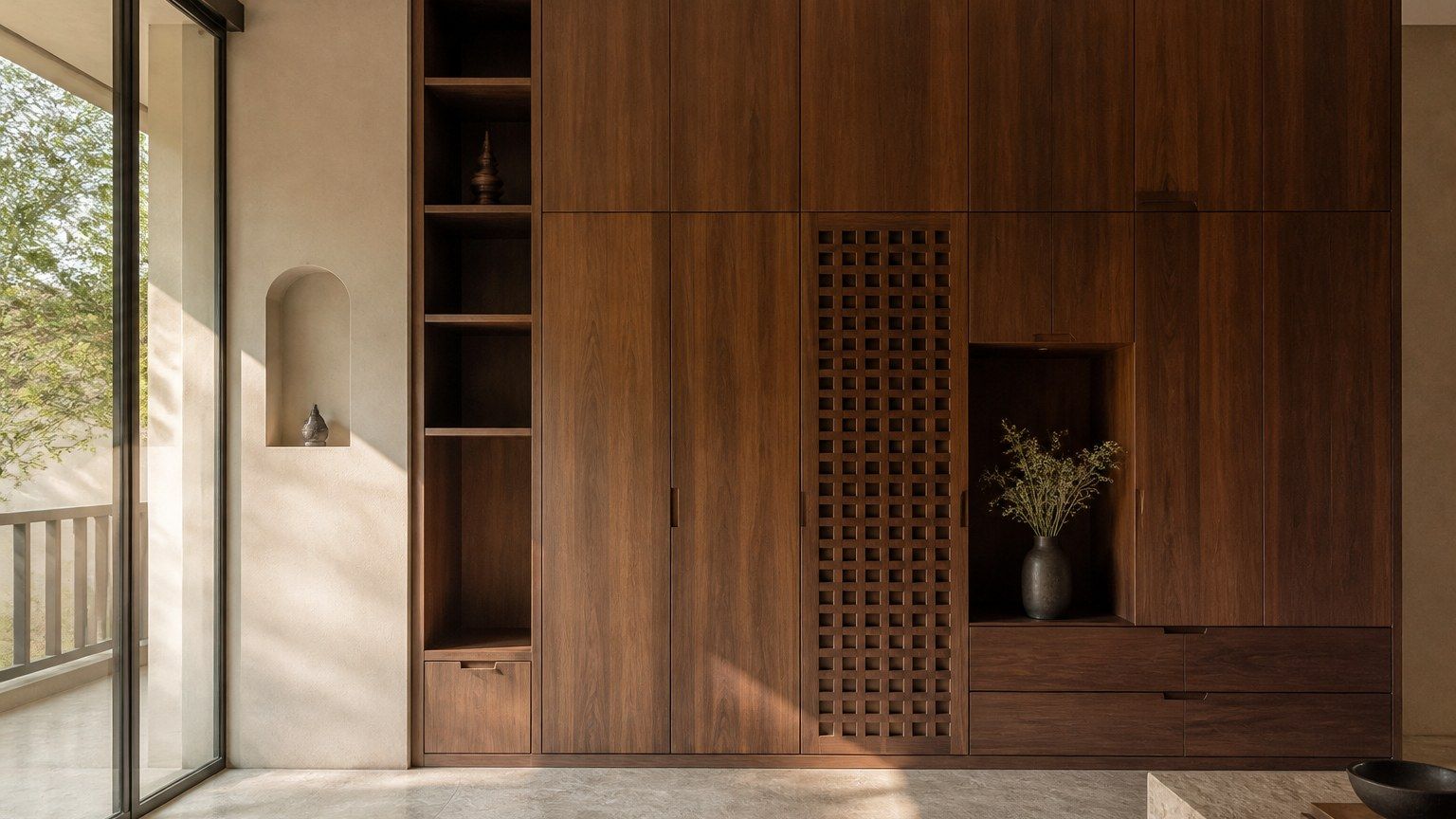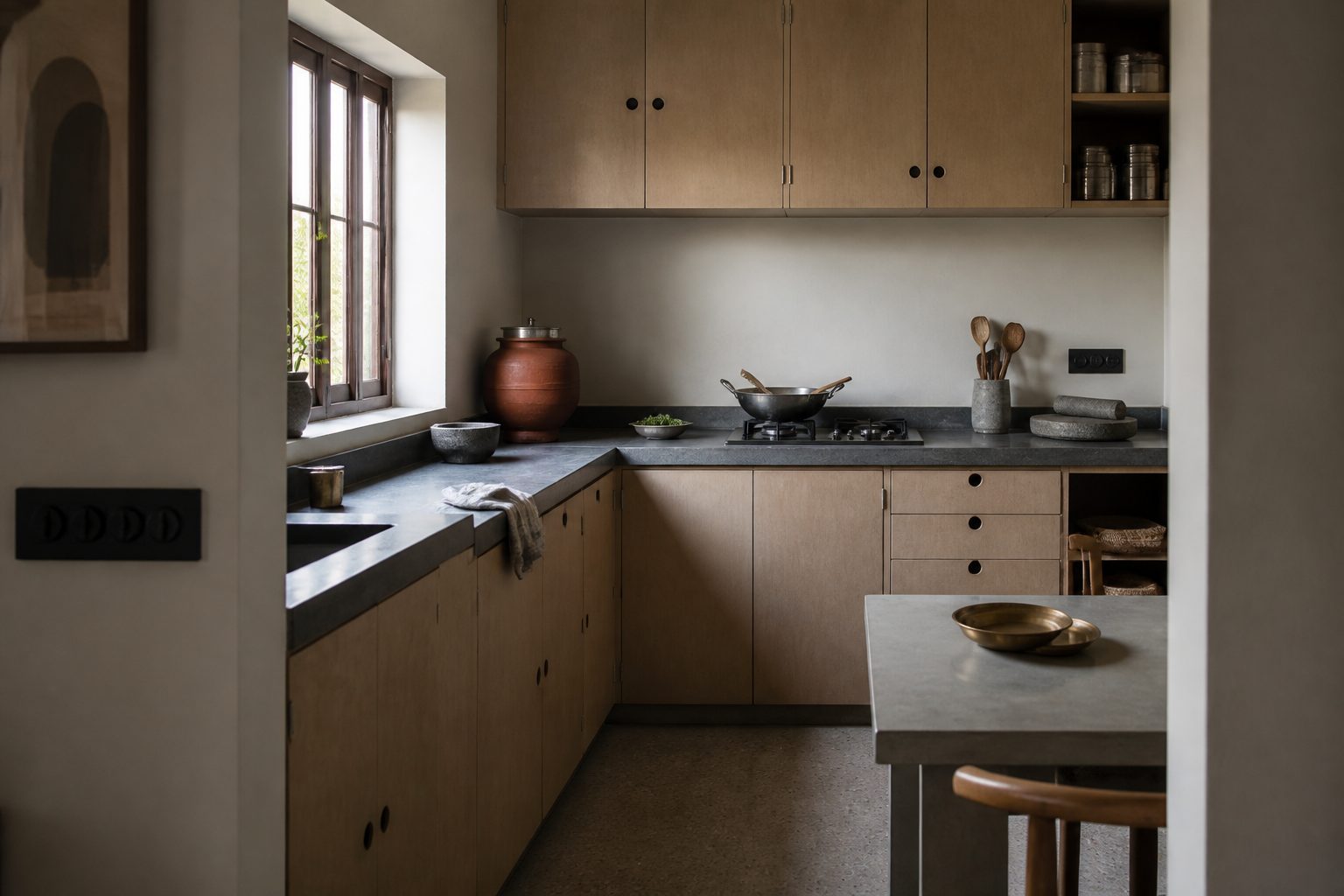
The room is already at work before anyone calls it designed.
Most kitchen pages begin with a style. Shaker or handleless. White or walnut. An island if the plan will take one. Those choices are not nothing. They are not the first decision in an Indian house.
The first decision is whether the room can take heat, steam, oil, wet grinding, turmeric, and a floor that will be washed. If it cannot, the look will last a season and the specification will be replaced.
This is not a buying guide. It is a way of looking at the kitchen as a working interior — the same discipline applied to a workplace or a restaurant, only closer to the body and used every day.
A kitchen that photographs well and fails in the monsoon was never specified. It was styled.
The kitchen as a climate interior
Indian cooking puts water and fat into the air. Extraction helps; it does not make the room dry. Shutters swell. Edges stain. A glossy worktop that looked calm in the studio becomes a record of every pot that sat too long.
Daylight is as decisive as moisture. A kitchen that faces harsh morning sun will show every smear on a dark high-gloss door. A kitchen with no light at the wet work will make people cook by glare from a downlight. The plan has to place the hob, the sink and the window in a relationship that can be cleaned — not only in a relationship that looks open.
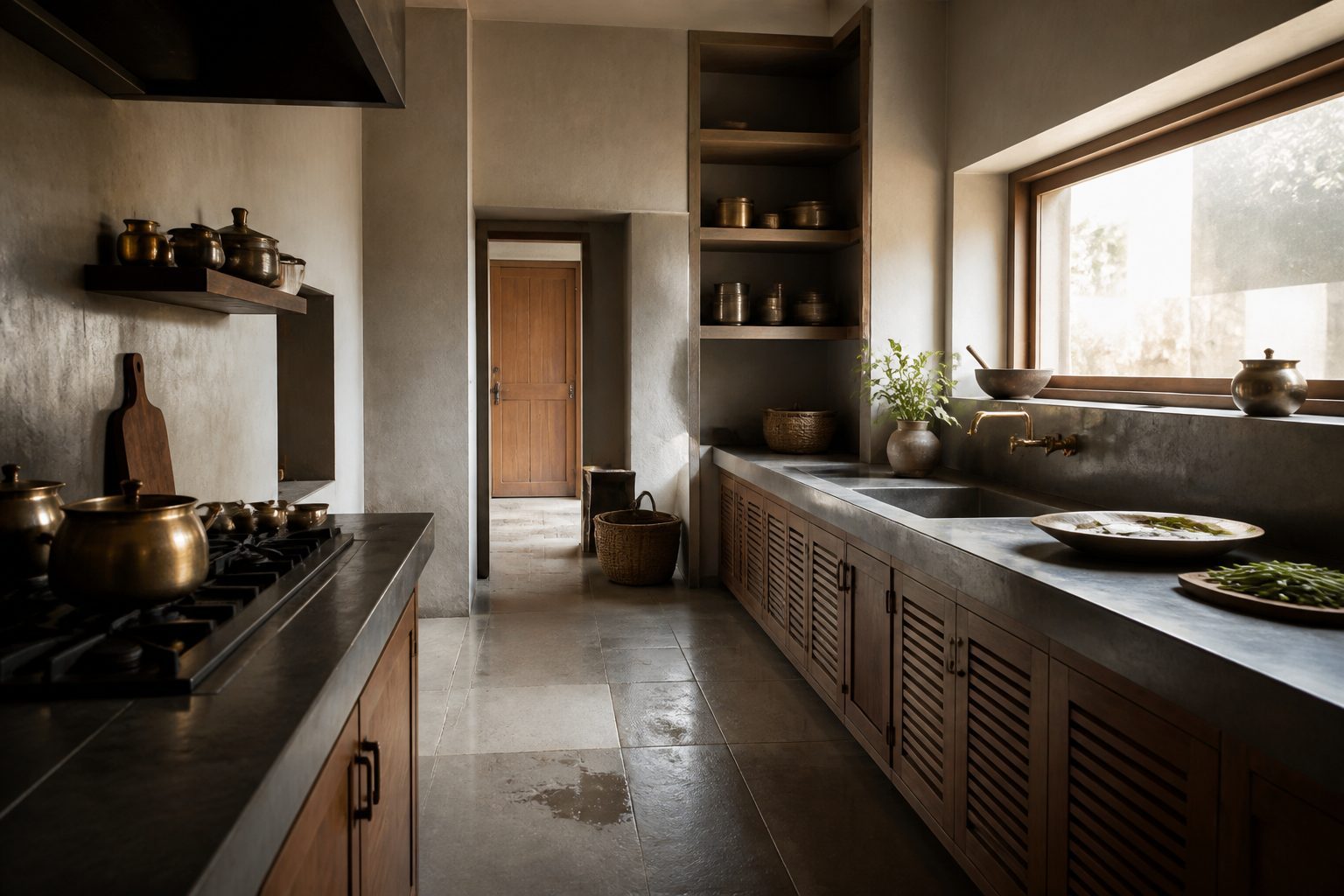
Shutters that can be washed
Shutter type is usually sold as a catalogue. Acrylic, laminate, lacquer, veneer, glass, membrane. The useful question is narrower: what happens at the edge after two monsoons, and can the face be wiped without leaving a map of every cloth?
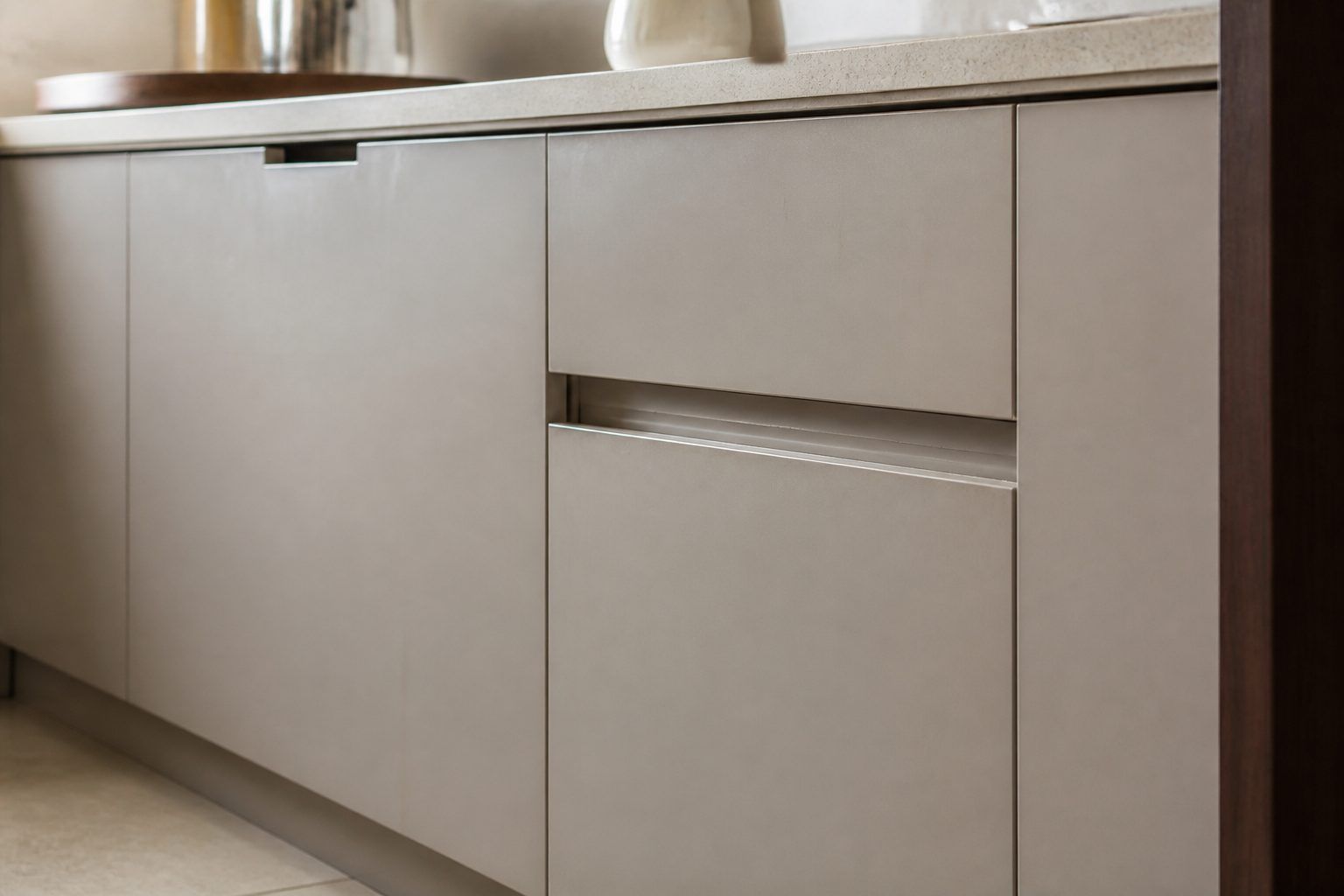
Membrane and cheap foil fail first at the corners. High-gloss acrylic shows every fingerprint and every splash of oil. Open grain veneer is handsome in a living room and unforgiving next to a kadhai. A flat, repairable face — a good laminate, a well-applied lacquer, a sealed veneer used away from the wettest run — is less a style and more a maintenance decision.
Hardware belongs to the same sentence. A recessed pull that can be cleaned will outlast a decorative handle that collects grease. Soft-close is useful until it is specified as a brand story. The door has to close after a wet hand. That is the test.
A counter that can take the work
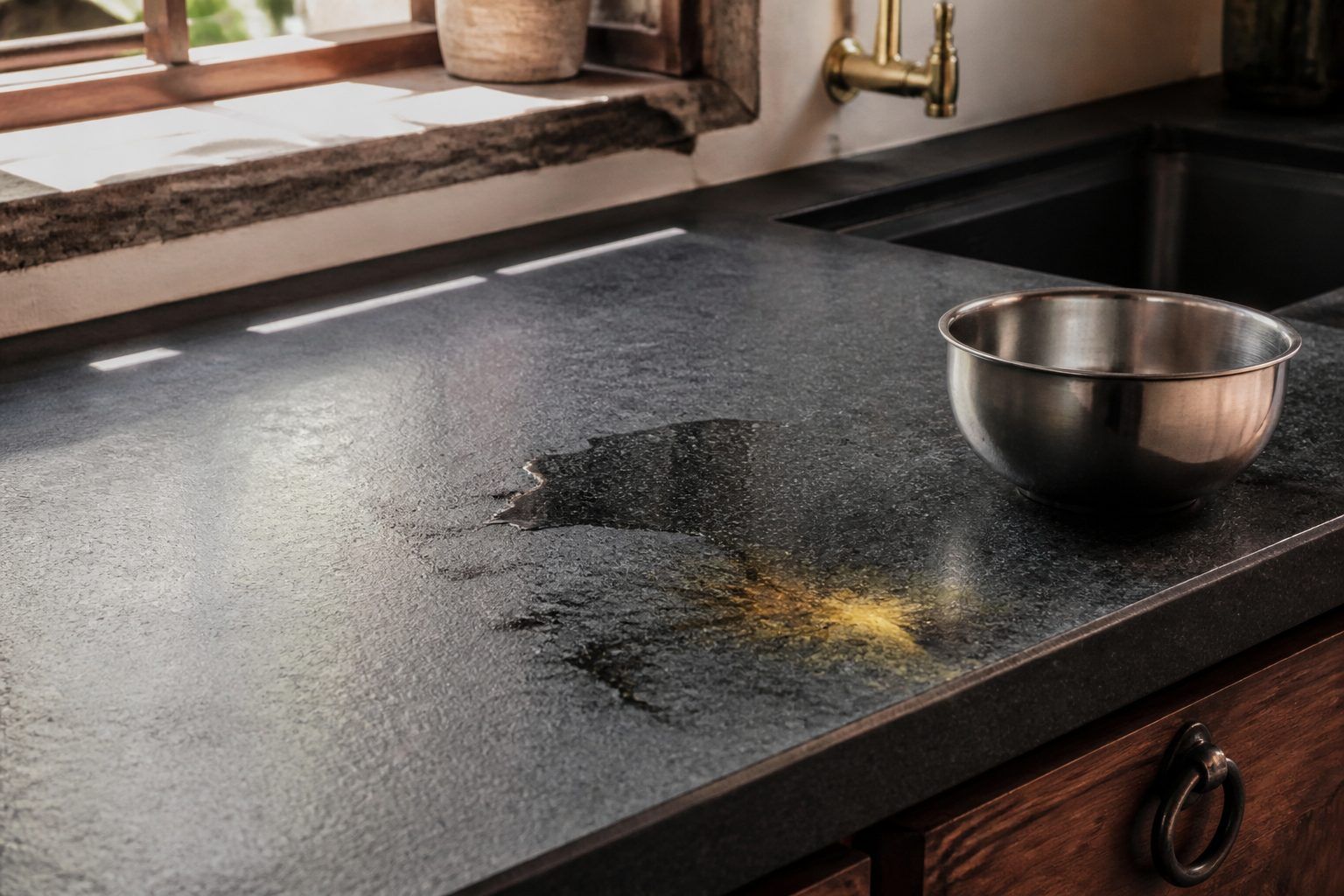
“Best countertop for an Indian kitchen” is a search that usually wants a winner. There is not one. There is a set of behaviours: heat from a pot put down without a trivet, wet grinding, acid, oil, and the wish to see the room still composed at the end of the week.
Honed granite and compact stone earn their place because they can be repaired and do not ask to be treated like jewellery. Polished marble can belong in a house; it is a poor wet-work surface next to turmeric and lemon. Stainless at the hob or the sink is not a downgrade. It is an admission that some metres of the room are industrial, even when the rest of the house is quiet.
The junction matters more than the brand name. A clean edge, a sensible upstand, a sink that does not leave a dirt line no one can reach — these are specification, not décor. A beautiful slab with a cheap drip at the sink will be remembered as the cheap drip.
What this page is not
It is not a chimney catalogue, and it is not a hardware brand list. Those pages already exist on the old site; they do not become a second Journal essay. Extraction, hinges and accessories are chosen after the room’s climate and the worktop’s behaviour are understood — not instead of that understanding.
It is also not a materials-emissions essay. What a board off-gasses, and whether a kitchen should last twenty years rather than five, are neighbouring questions. They are answered elsewhere. Here the question is narrower: can this room be cooked in, washed, and still look like itself.
Closing thought
Specify the kitchen as if it will be used hard and kept. The look can follow. When the shutters, the stone and the wet work are honest, the room has less need to announce itself.
The lasting kitchen is the one whose specification can be cleaned.