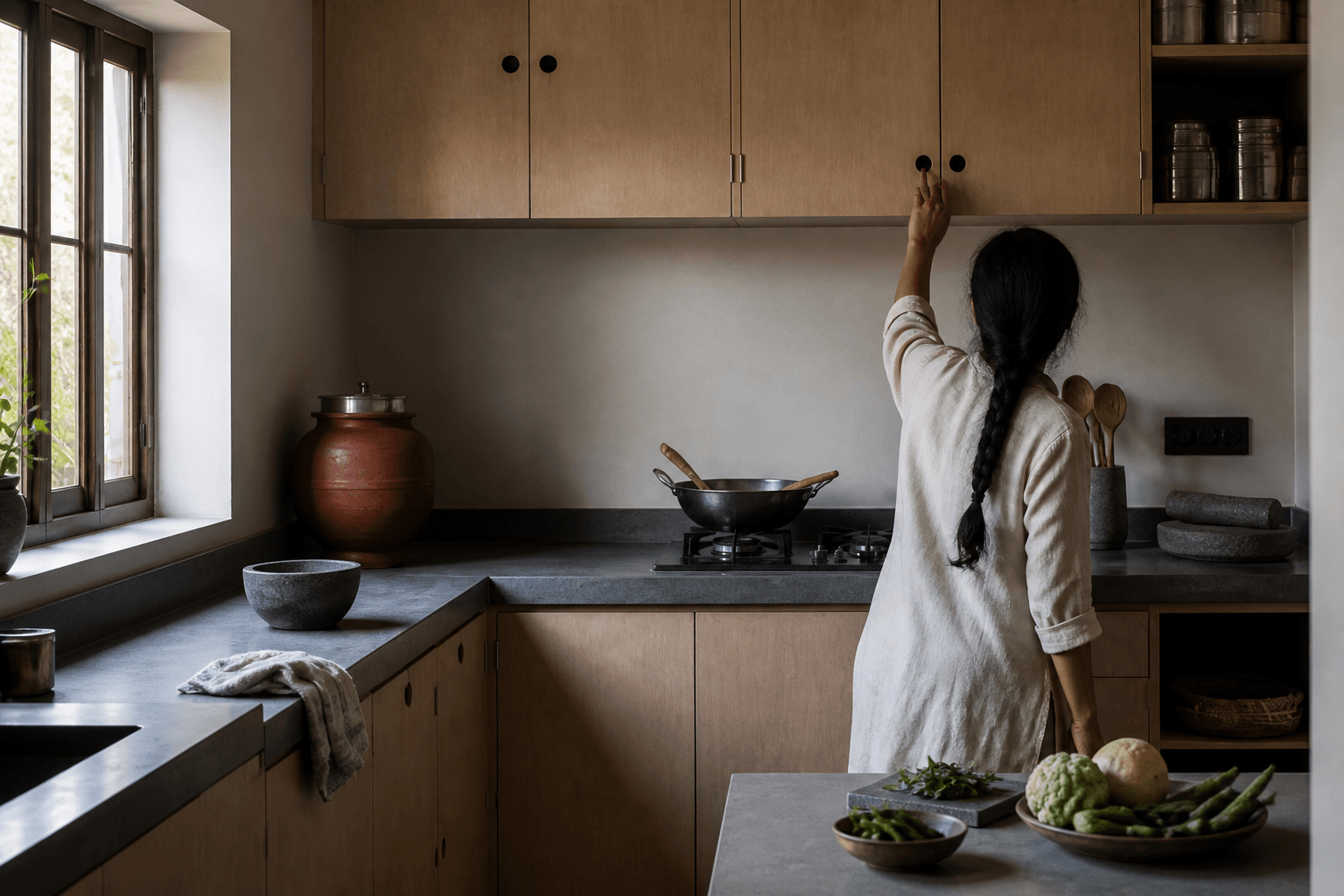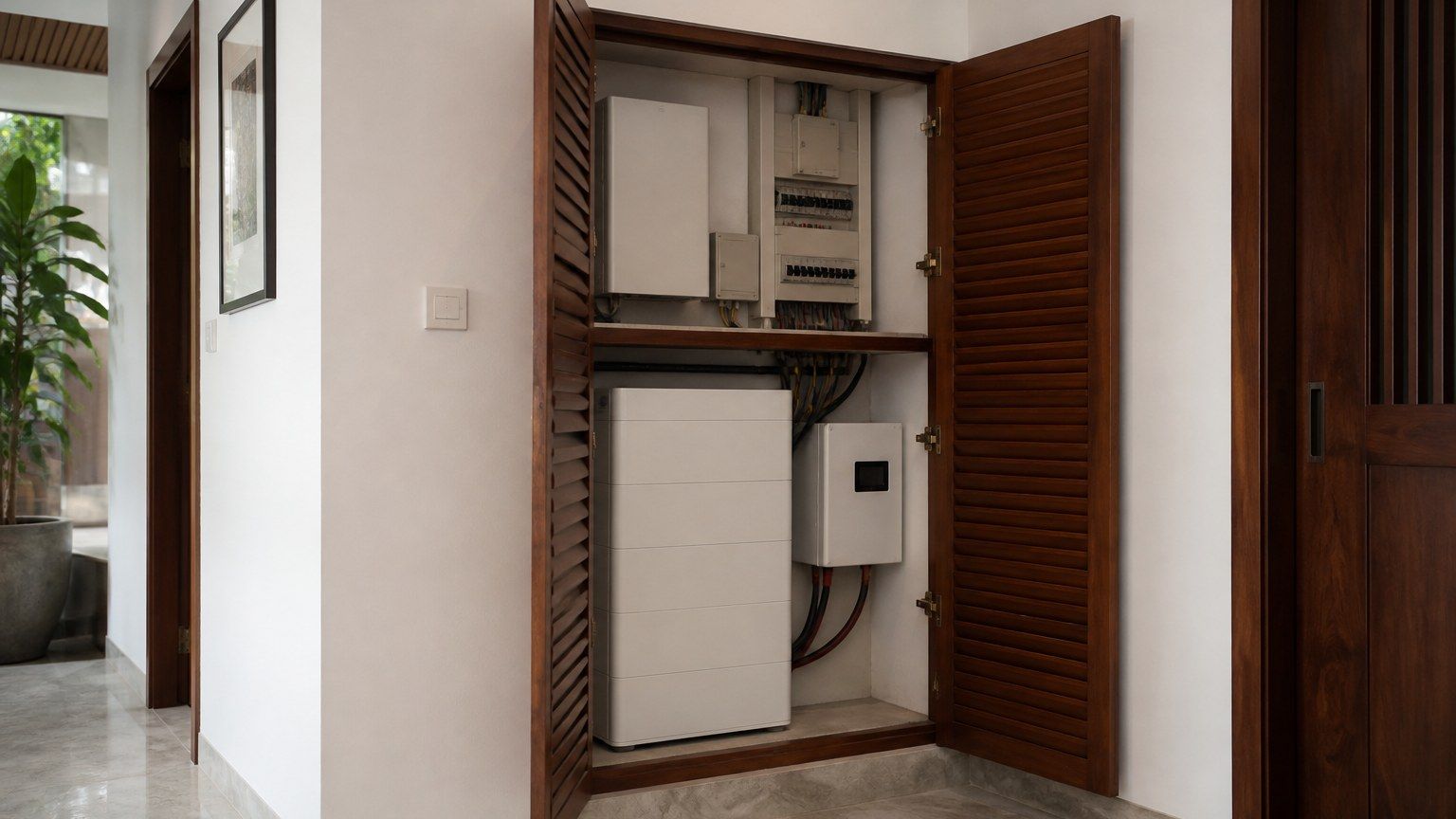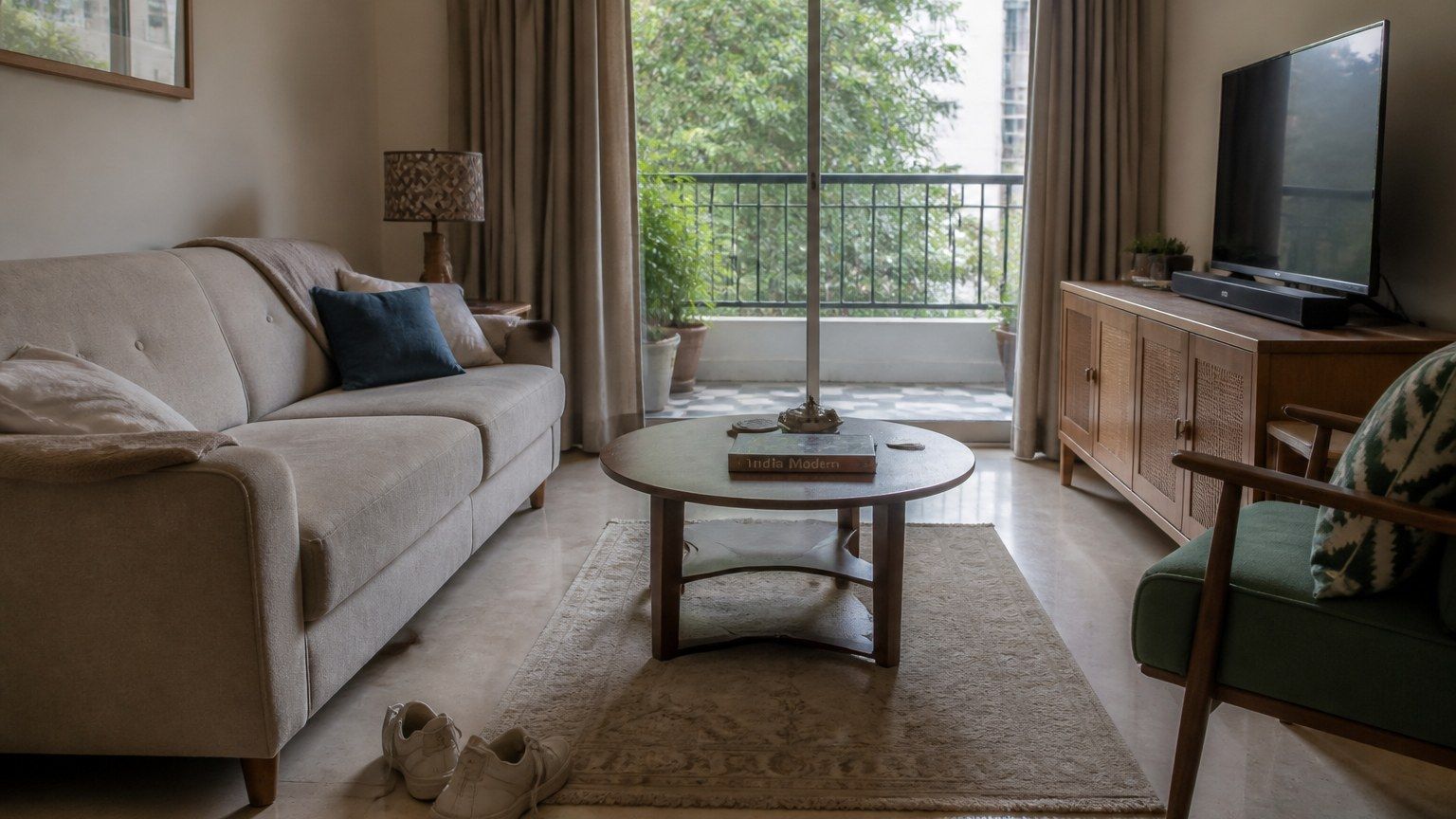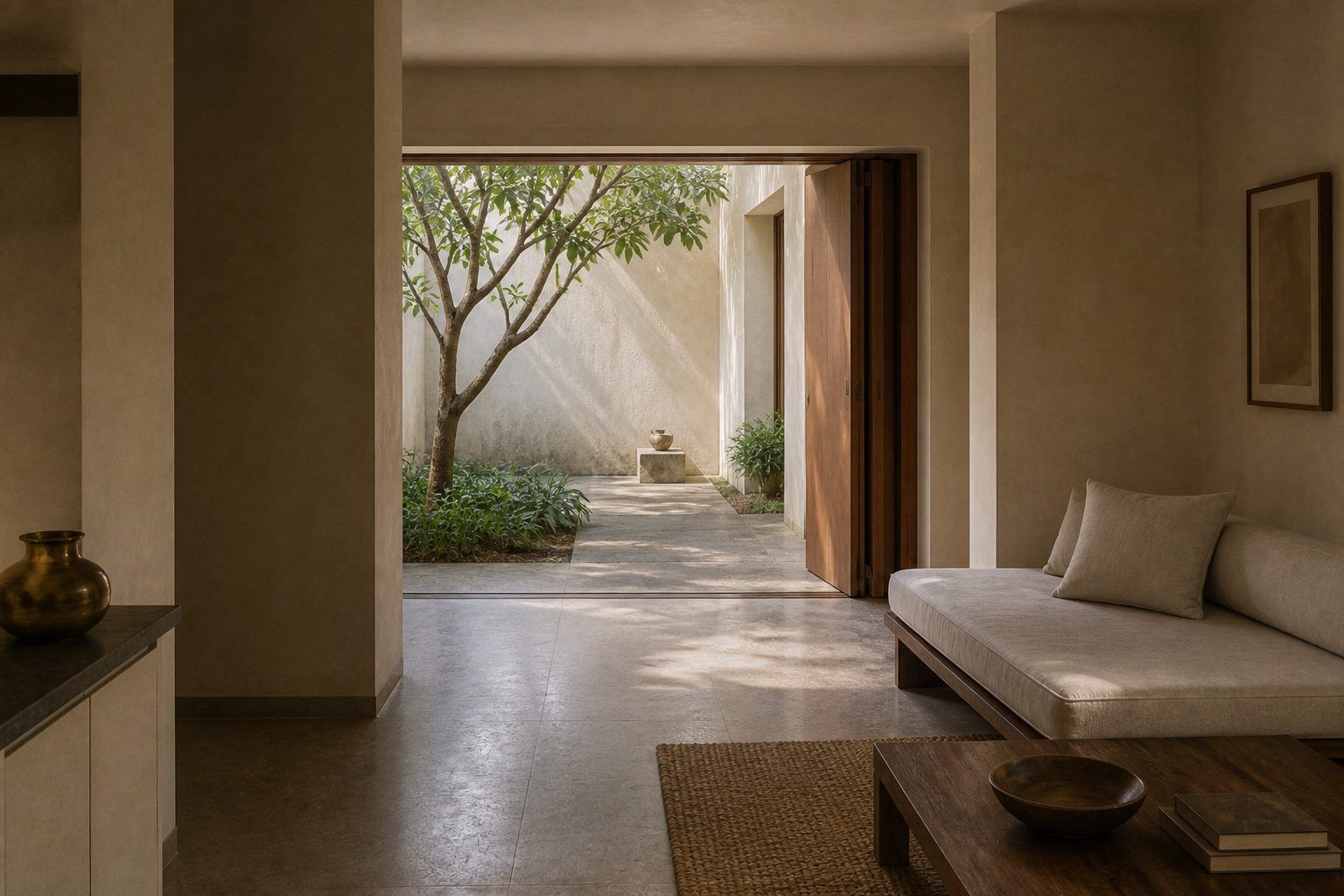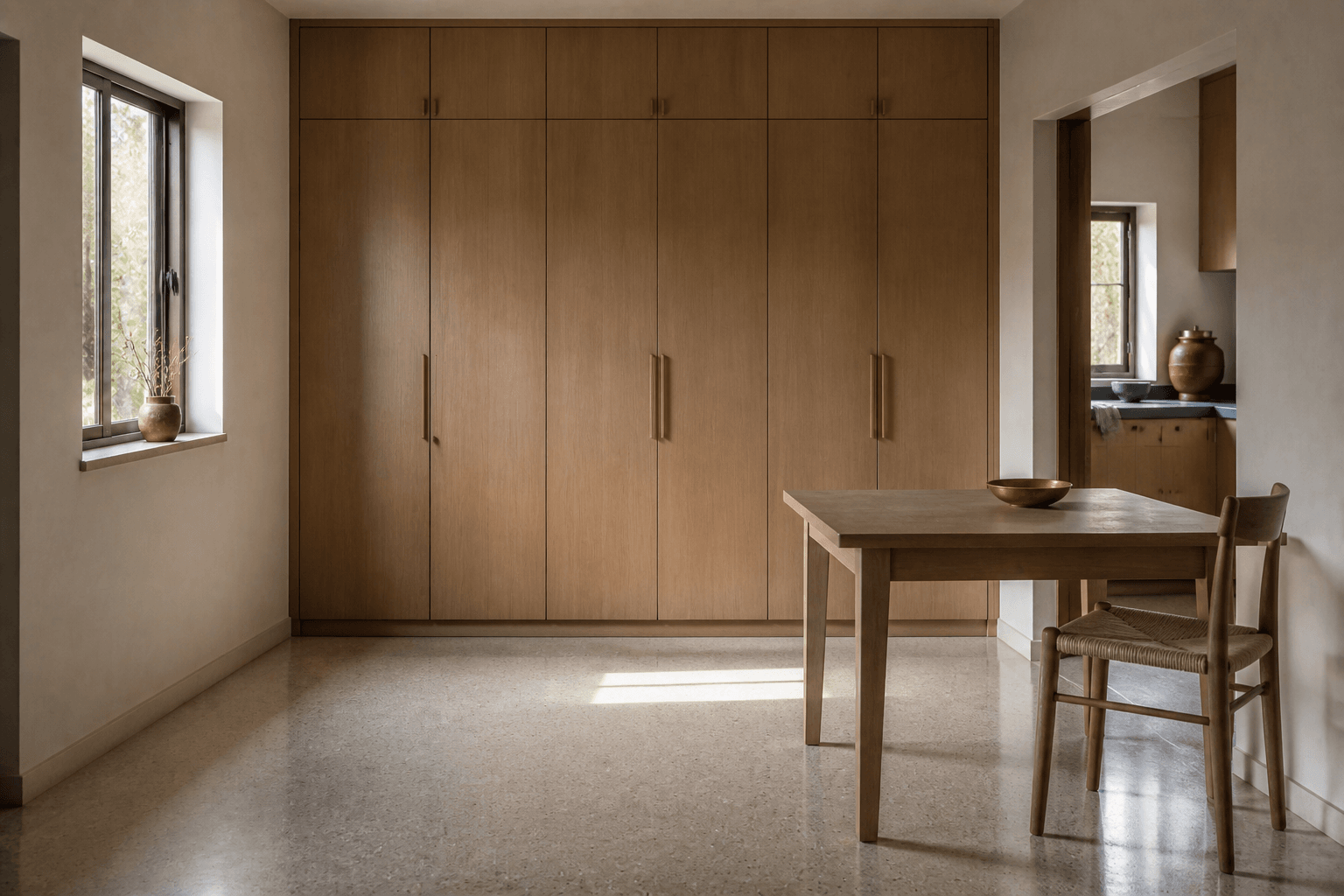
The room is already two rooms if the floor is left free.
Most pages about compact living begin with a mechanism. A wall that folds. A bed that rises. A table that becomes a sofa. Those devices can be useful. They are not the first decision in an Indian apartment.
The first decision is what the room must do in one day. Sleep and eat. Work and receive someone. Dry clothes and sit. If the plan cannot admit more than one of those without a performance, no amount of hardware will correct it.
A room that can only do the photograph will not be kept.
Clear floor before clever hardware
The cheapest way to change a room is to leave the floor free. Joinery on the edge. A table that can be moved by one person. A bed that does not consume the only sitting place. Mechanism is what you add when the plan has already failed.
This neighbours Planning Rooms Around the Body and Millwork as Architecture. It is not either essay. The body page is reach and passage. The millwork page is joinery as a wall. Here the question is time: can the same few metres be used differently before night.
Joinery that earns its thickness
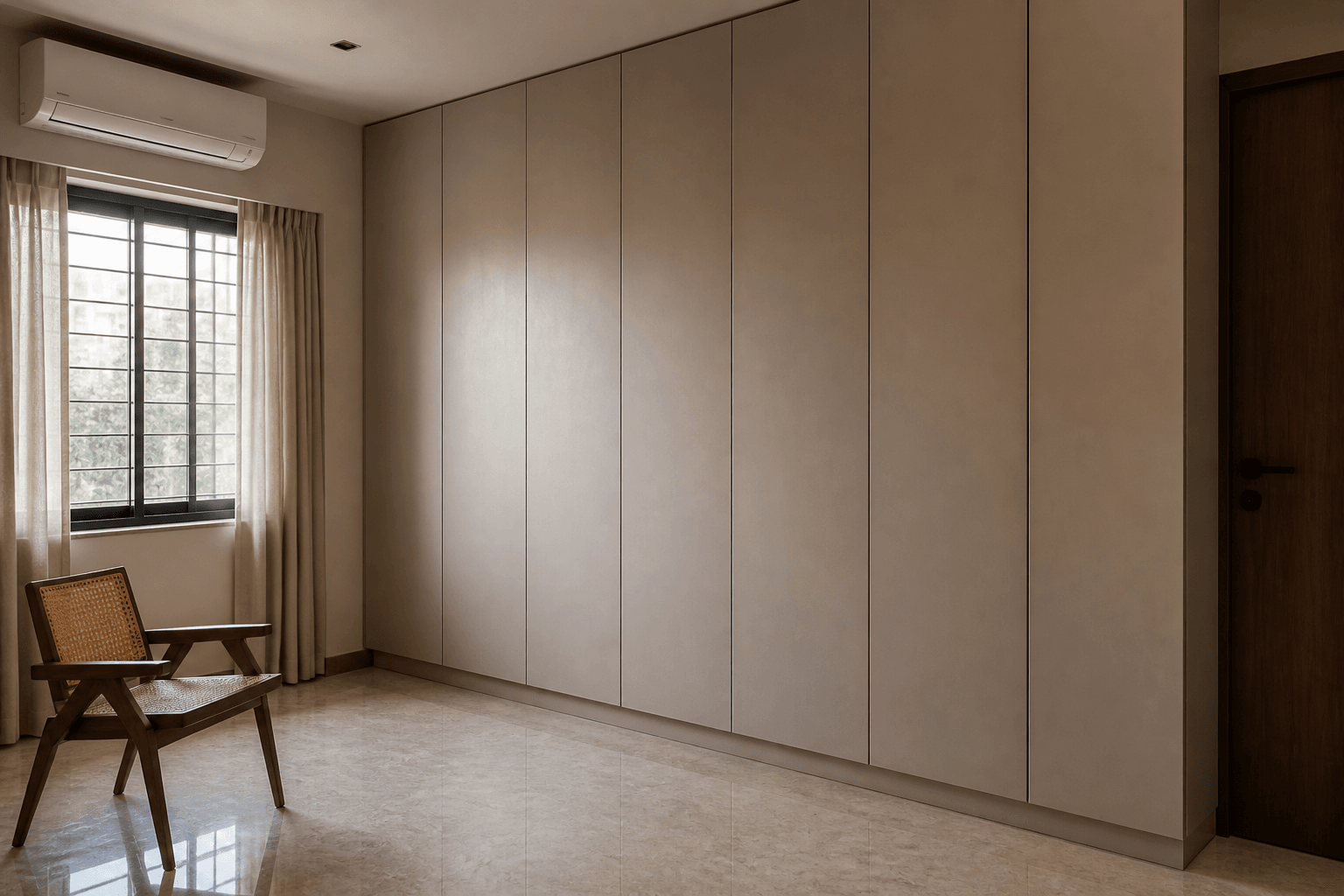
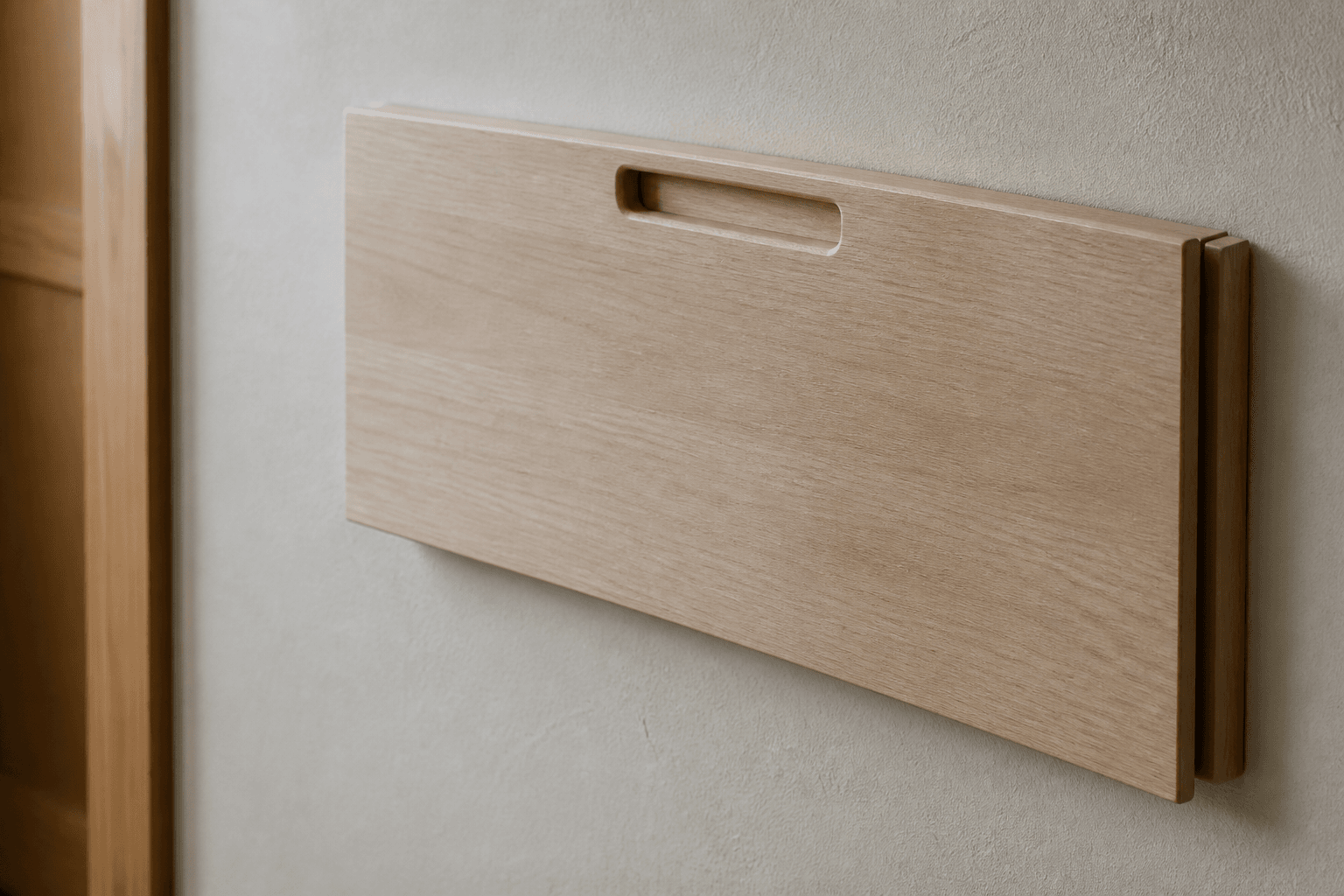
In a small plan, joinery is either a wall that works or a cupboard that steals the room. Depth that cannot be reached is waste. Doors that cannot open because a chair is in the way are waste. A fold-down surface that needs two people and a clear diary is not compact living. It is a demonstration.
Specify what will be used daily so that it can be used with one hand. Guest arrangements can be slower. Daily arrangements cannot.
What must not move
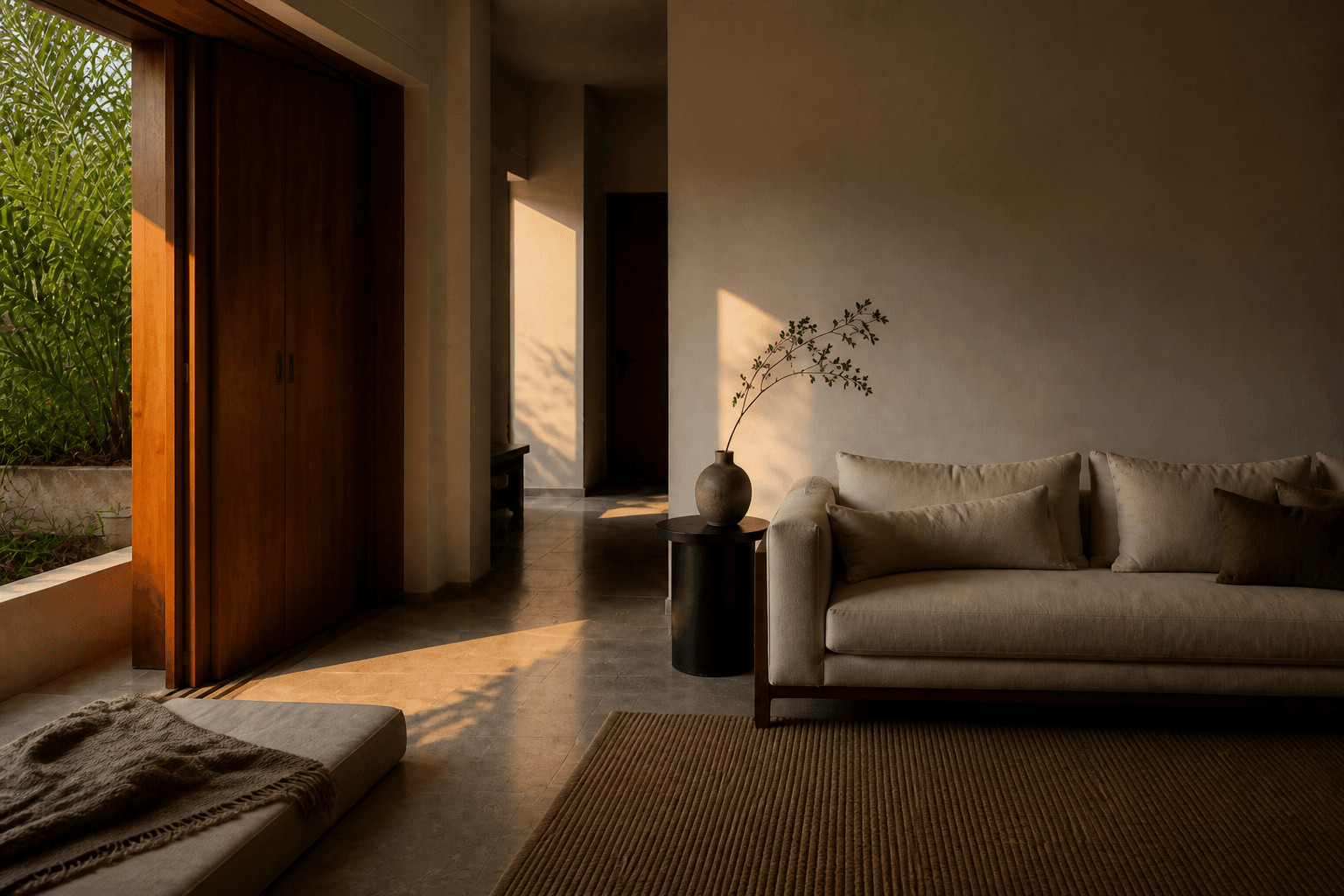
Wet work, the entry, and the place a person sleeps should be stable. Compact living fails when everything is asked to transform. A house needs a few facts that do not change so that the rest of the room can.
Power, light and a floor that can be washed belong to those facts. They have their own pages. Do not solve a planning problem by hiding a second life inside a piece of furniture that will break.
What this page is not
It is not a kinetic-interiors trend piece. It is not a transformer-furniture catalogue. It does not invent apartments, mechanisms or project stories. Hardware is allowed. It is not the thesis.
Closing thought
Leave the floor free and put the storage on the edge. Let one surface change use. When the room can be lived in twice in a day, it has less need to announce that it is clever.
The lasting compact room is the one that can change without a performance.