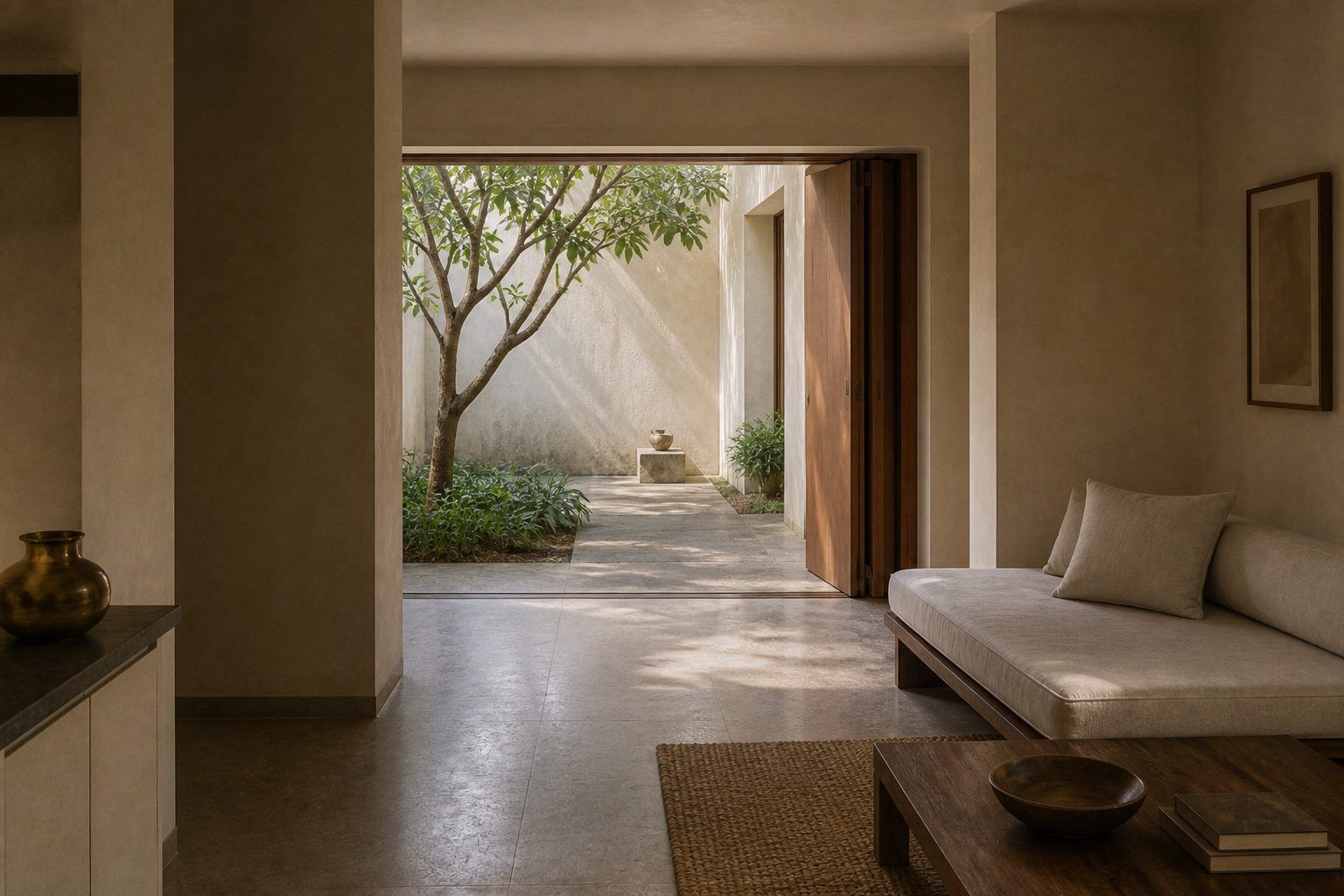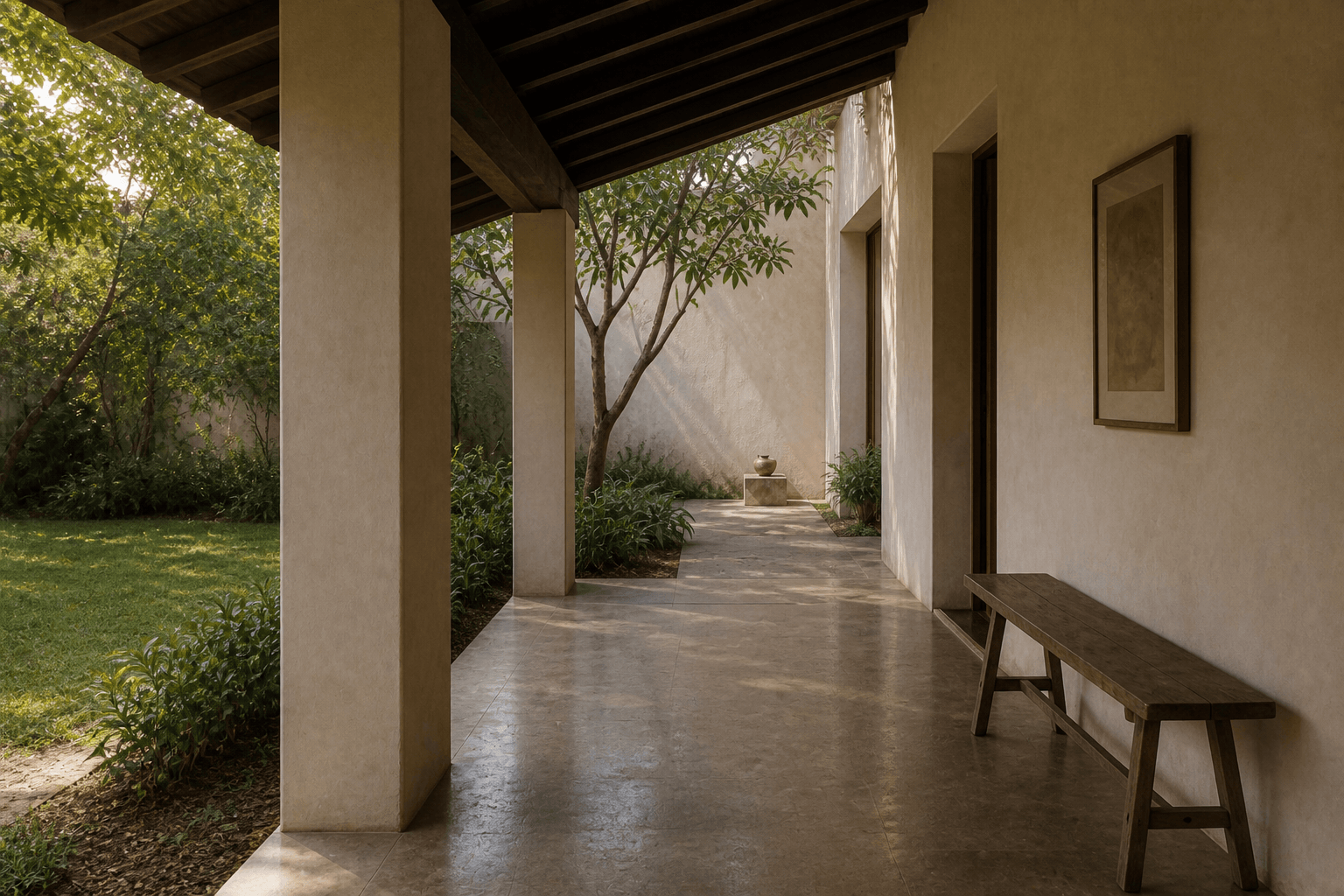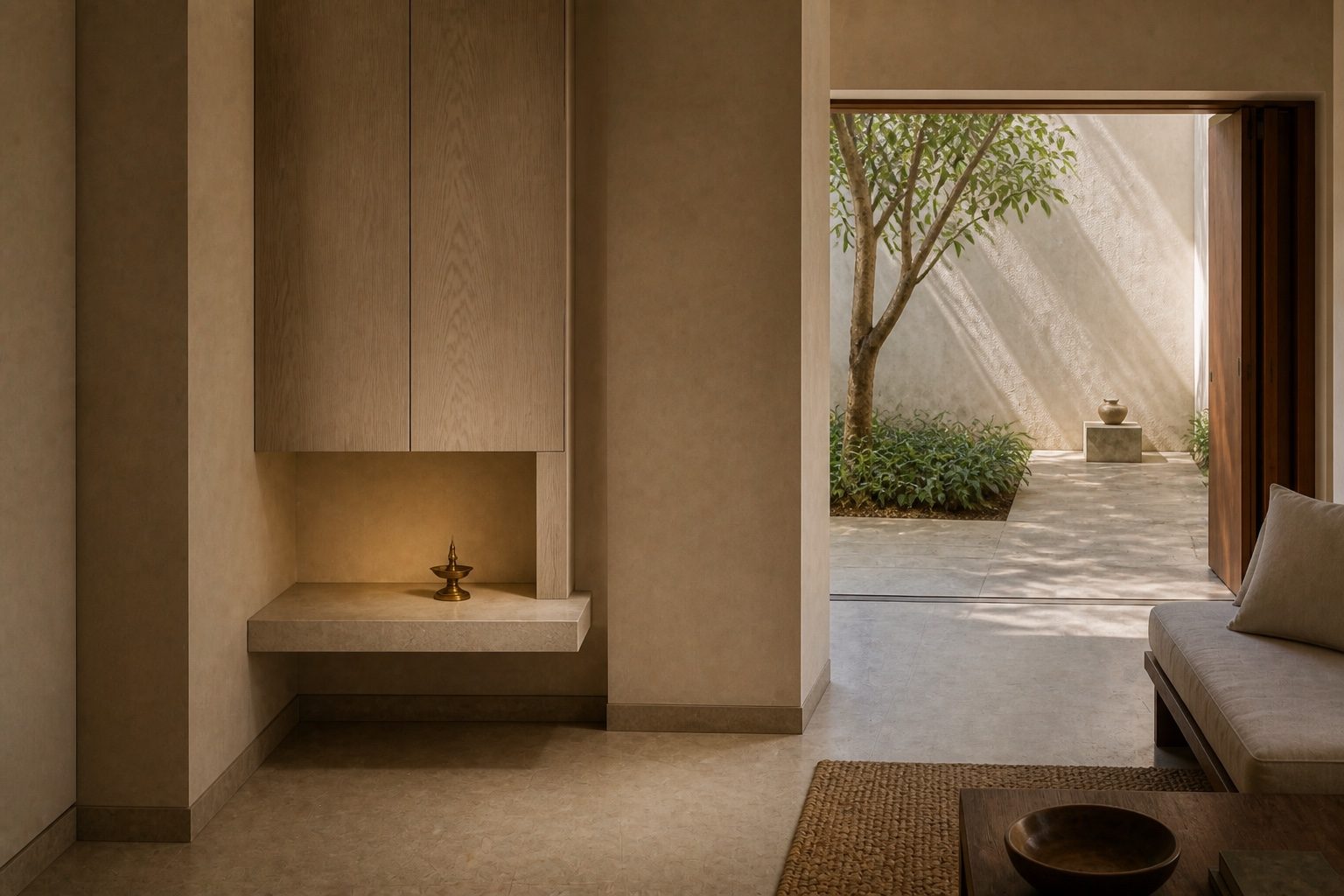
The room begins when the living room stops. Joinery and light are enough.
Most pages about a pooja room begin with a compass. Northeast. White marble. A door with a carved frame. Those pages are easy to write. They are not a plan for the houses that actually have to hold a place of prayer: a flat whose walls cannot move, a living room that is also the only sitting room, a kitchen that is already wet work.
The useful question is not a direction list. It is whether the house has a place that can be approached, used and put away. Light that belongs to that work. A threshold that is not a performance. Storage that can take a lamp, a vessel and what is used every morning without turning the niche into a display.
If the niche has no threshold, no light of its own and nowhere to put what is used daily, it is décor.
A room, a recess, or a shelf — still a plan
A separate room is the easiest sentence. Most urban Indian apartments do not have one. The work then is to find an edge that is not already in daily traffic: a corner that is not the television wall, a recess that is not the passage, a shelf that is not already holding keys.
A corner that nobody sits in can become a room if the floor is left free enough to sit, and if the joinery closes. A shelf that is only deep enough for a photograph is not a room. It is a reminder. The plan has to admit which of those the house can actually keep.
This neighbours Rooms That Can Change and Planning Rooms Around the Body. It is not either essay. Those pages are change of use and reach. Here the room does not change use. It needs to stay itself while the rest of the house moves around it.
Light that belongs to the work
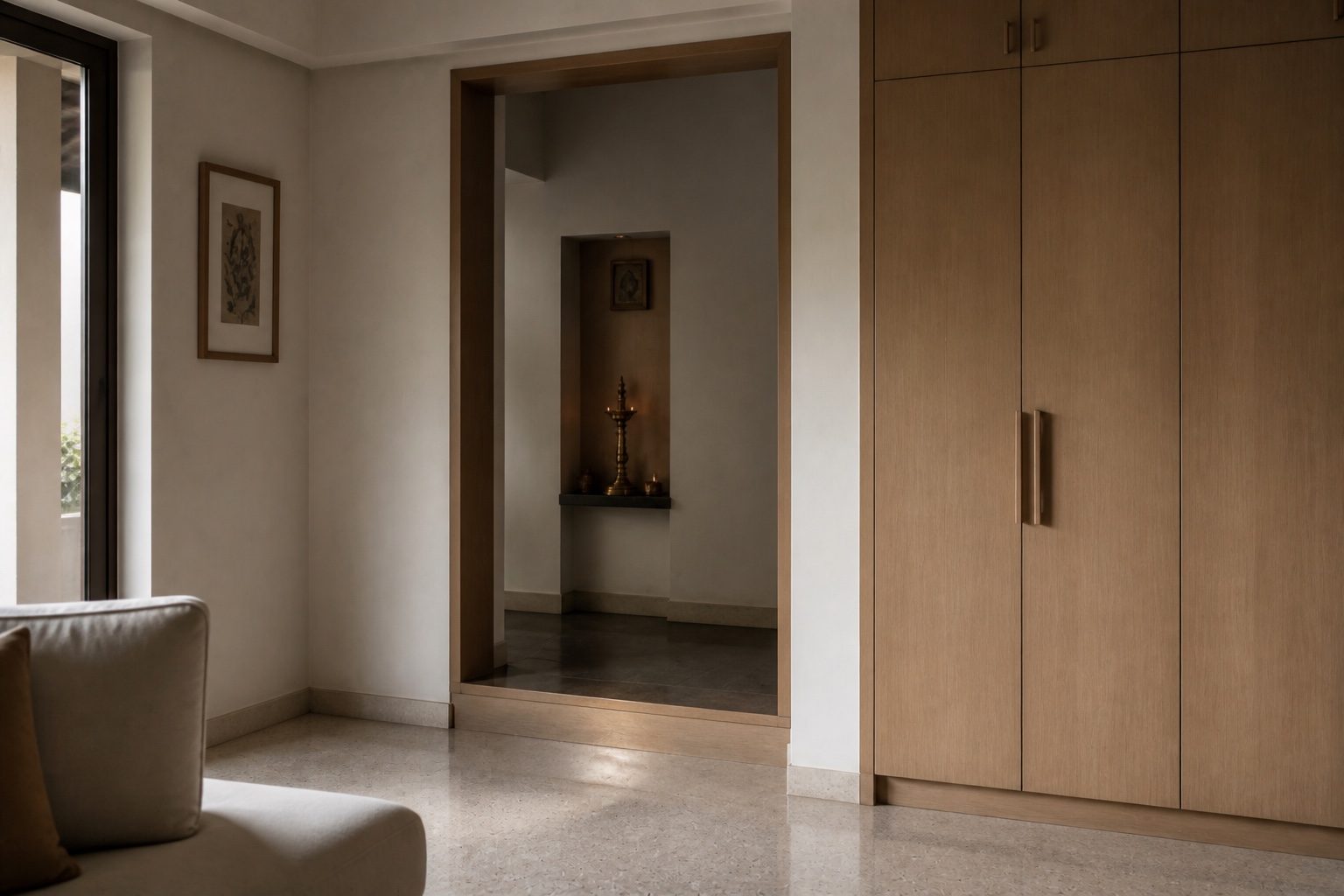
A pooja niche that lives on leftover living-room glare will be used in a hurry or not at all. A downlight that photographs well and cannot be dimmed will flatten the room. A dark finish in a small recess will swallow the only lamp.
Give the place a light it owns. Side light if a window can be shared without putting the work in the sun. A lamp that can be reached with one hand. A surface that can take a flame or a bulb without staining the plaster. This is neighbouring to Designing for Indian Light. It is not that essay. Indian Light is the house. Here the question is narrower: can the work be seen without turning the rest of the room into a stage.
Brightness is not the same as glare. A small alcove often needs a lighter wall, not a paler photograph. If the recess is already dim, do not specify a finish that drinks the lamp.
Storage is not decoration
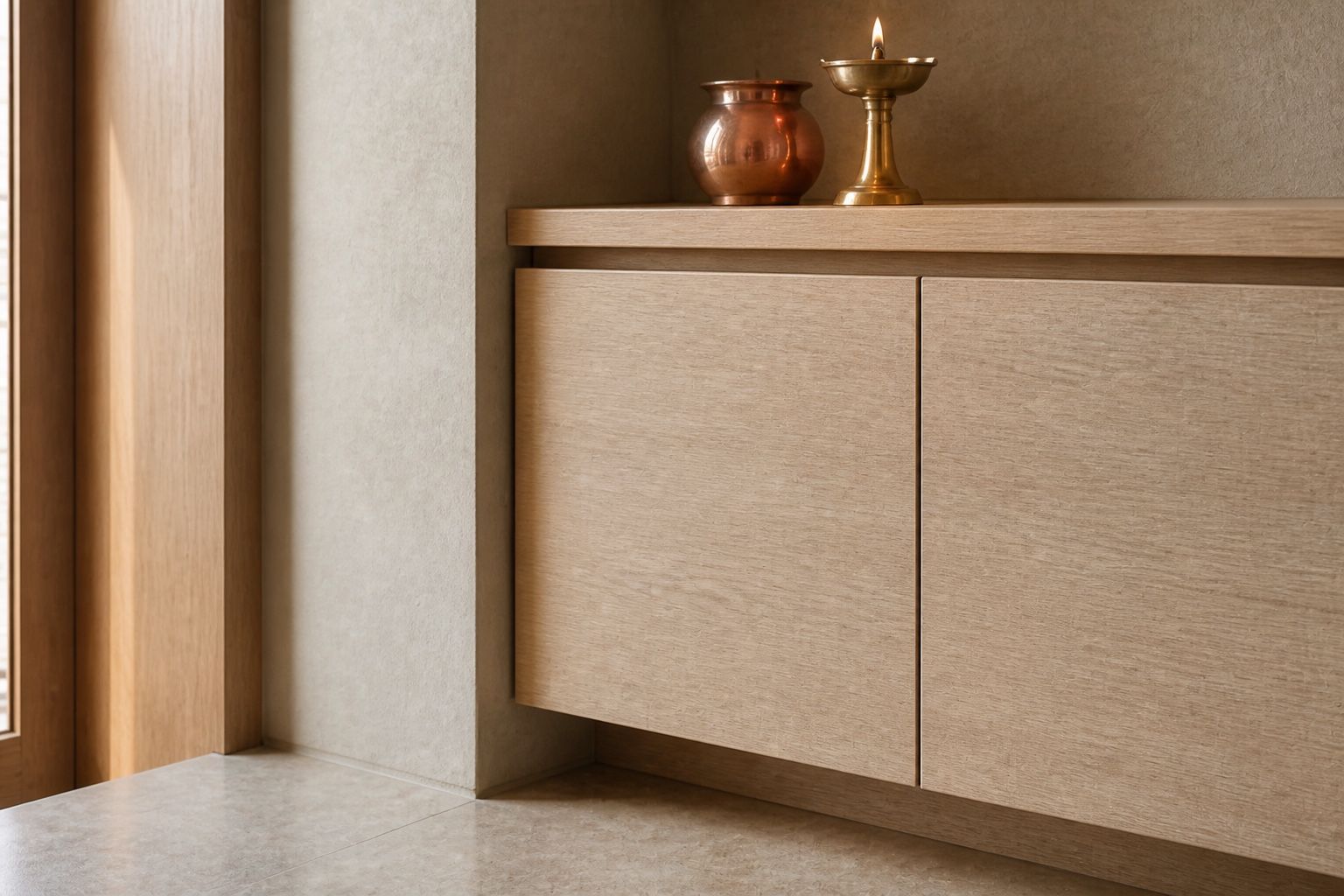
Daily prayer leaves objects. Oil, water, a plate, a cloth, things that should not sit on the living-room table. If those have no closed place, the niche becomes clutter by the second week. If they have only an open shelf, the niche becomes a catalogue.
Put the daily things behind a door that can be opened with one hand. Leave a gap from the plaster so the back can be cleaned. Depth that cannot be reached is waste. A carved door that cannot be wiped is waste. This neighbours Millwork as Architecture and Indian Kitchen Specification. Those pages keep their own arguments. Here joinery is what lets the room be put away.
What must not sit against it
A pre-built flat cannot be rotated to please a compass. It can still refuse a few neighbours. Do not put the niche under a stair that is already a dump. Do not put it on the wall of a wet room if another wall exists. Do not put it in the kitchen unless the house has nowhere else: wet work and prayer will share a floor, and both will lose.
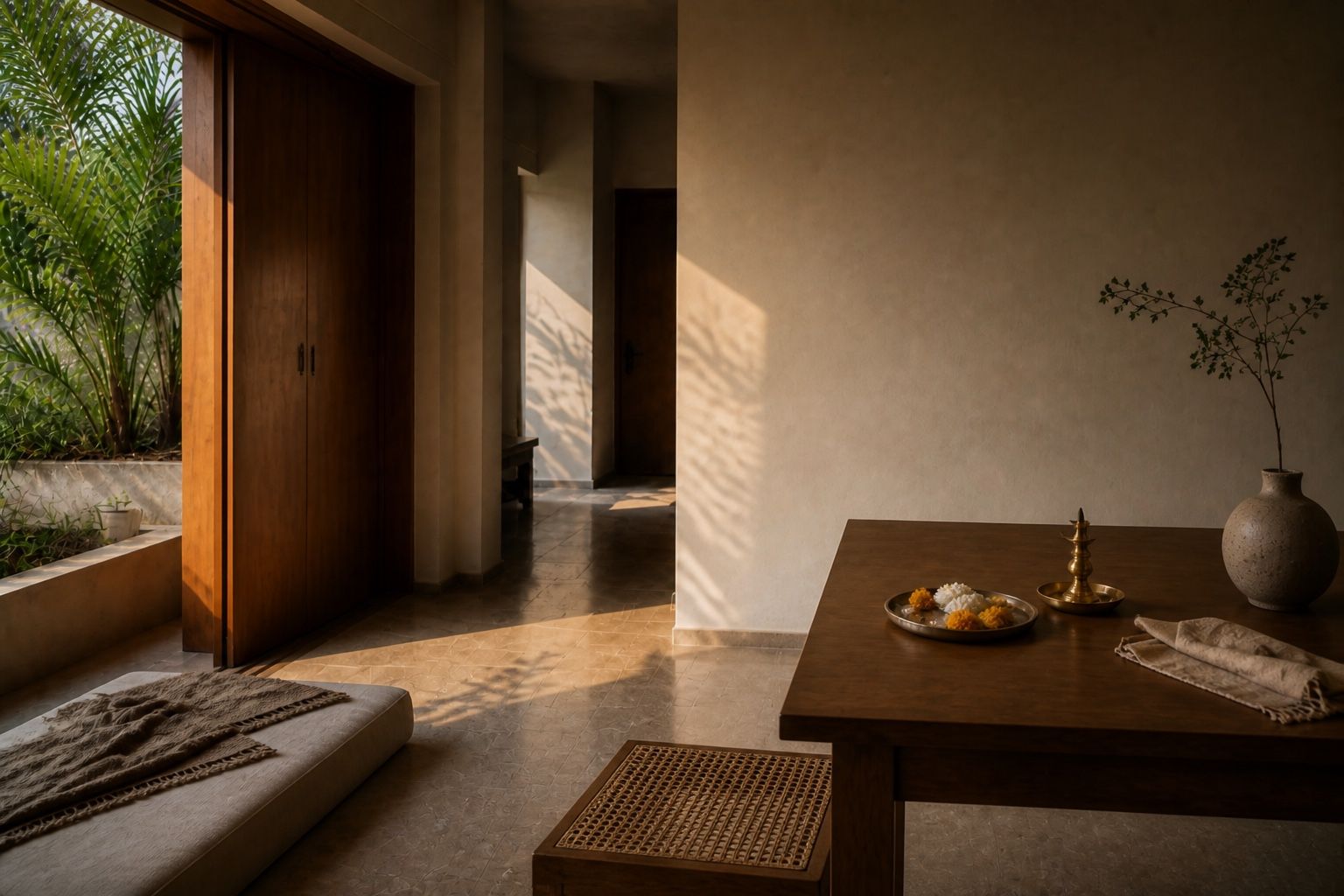
Privacy is not a temple door. It is whether a person can sit without being in the television sightline, and whether the living room can still be a living room when the niche is in use. Glass that displays the work to the sofa is not hospitality. A door that announces a village temple in a two-bedroom flat is not architecture. It is a product.
What this page is not
It is not a Vastu tip list. It is not a pooja-door catalogue. It does not publish directions as if they were a specification, and it does not revive a list of seventeen doors. Nature in Interiors is atmosphere. This page is a dedicated threshold for prayer. They are not the same room.
Closing thought
Give the work an edge, a light and a place to put things away. The look can be quiet. When the niche can be used every morning without a performance, the house has less need to announce that it is devout.
The lasting pooja room is the one that can be used and closed.