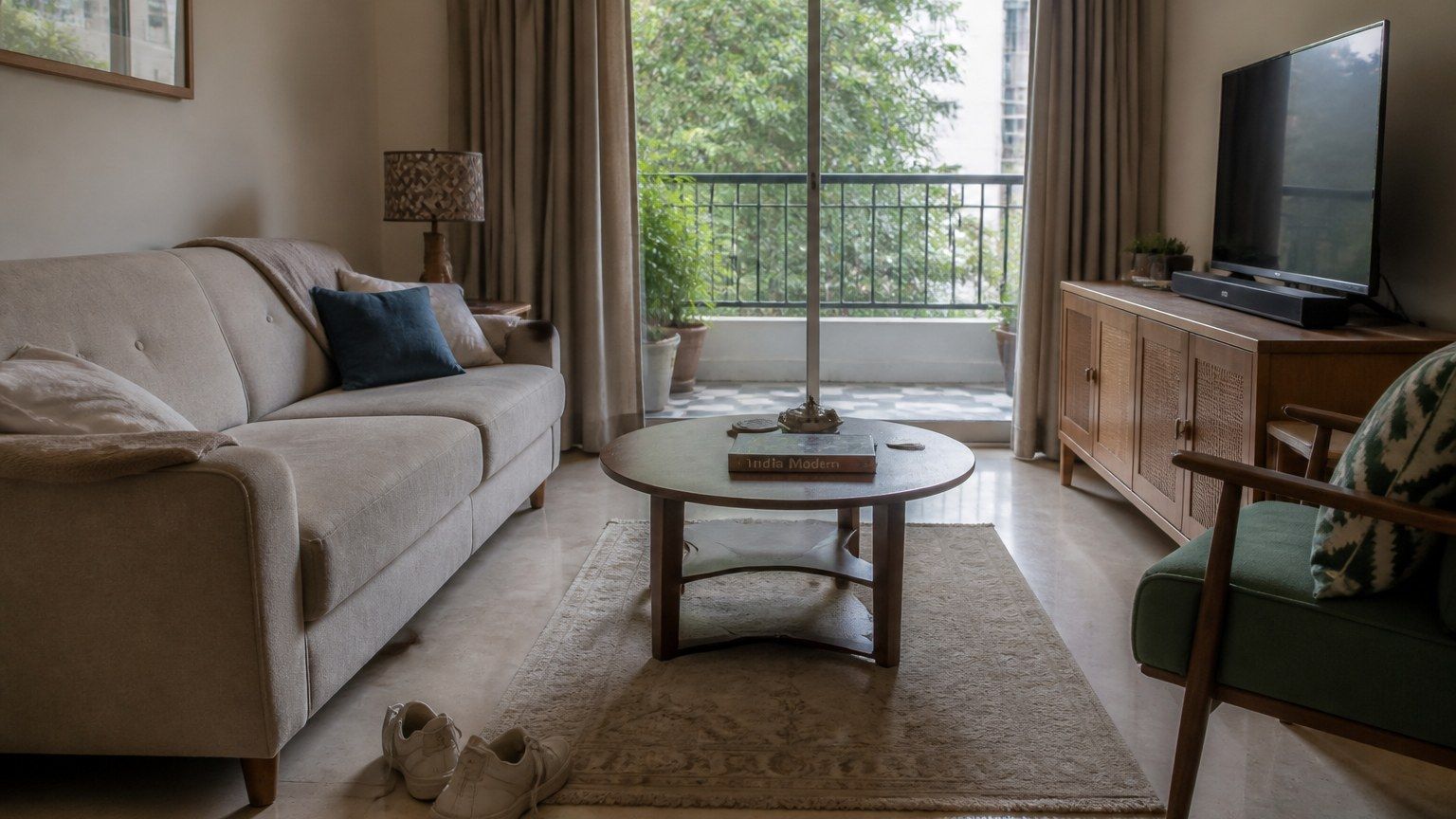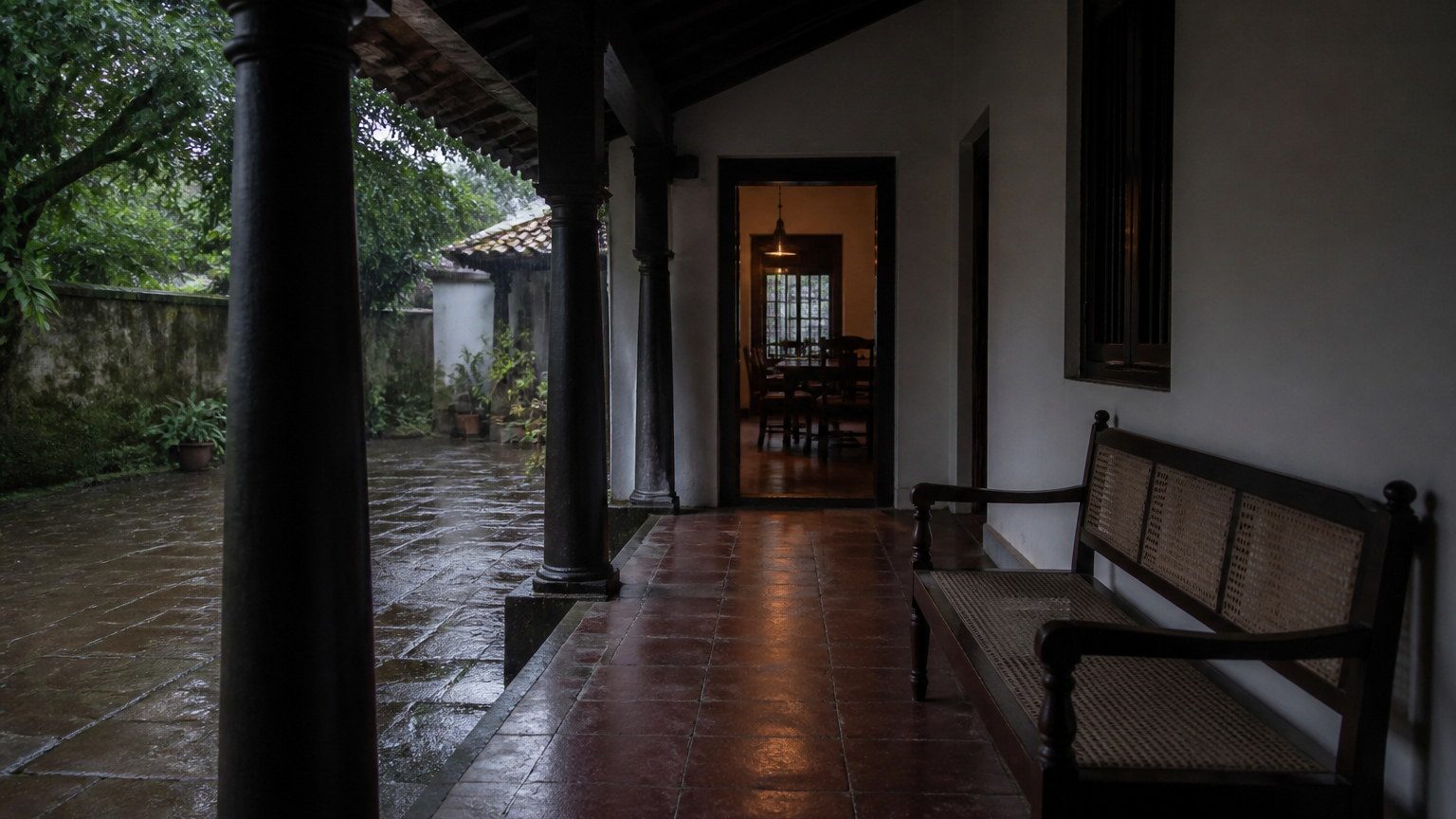
The monsoon is not a weekend of weather. It is a condition the house has to be built for.
Much residential design in India is still drawn as if the year were dry, bright and indoor. Then June arrives, and the house is asked to deal with water, humidity, swelling timber, mould in the wardrobe, and a light that is no longer the light the materials were chosen under.
The monsoon is not an enemy of interiors. It is a collaborator that will not be ignored. The useful attitude is not tropical decoration. It is detailing.
Comfort in the wet months is designed at the threshold, not at the cushion.
Thresholds do the first work
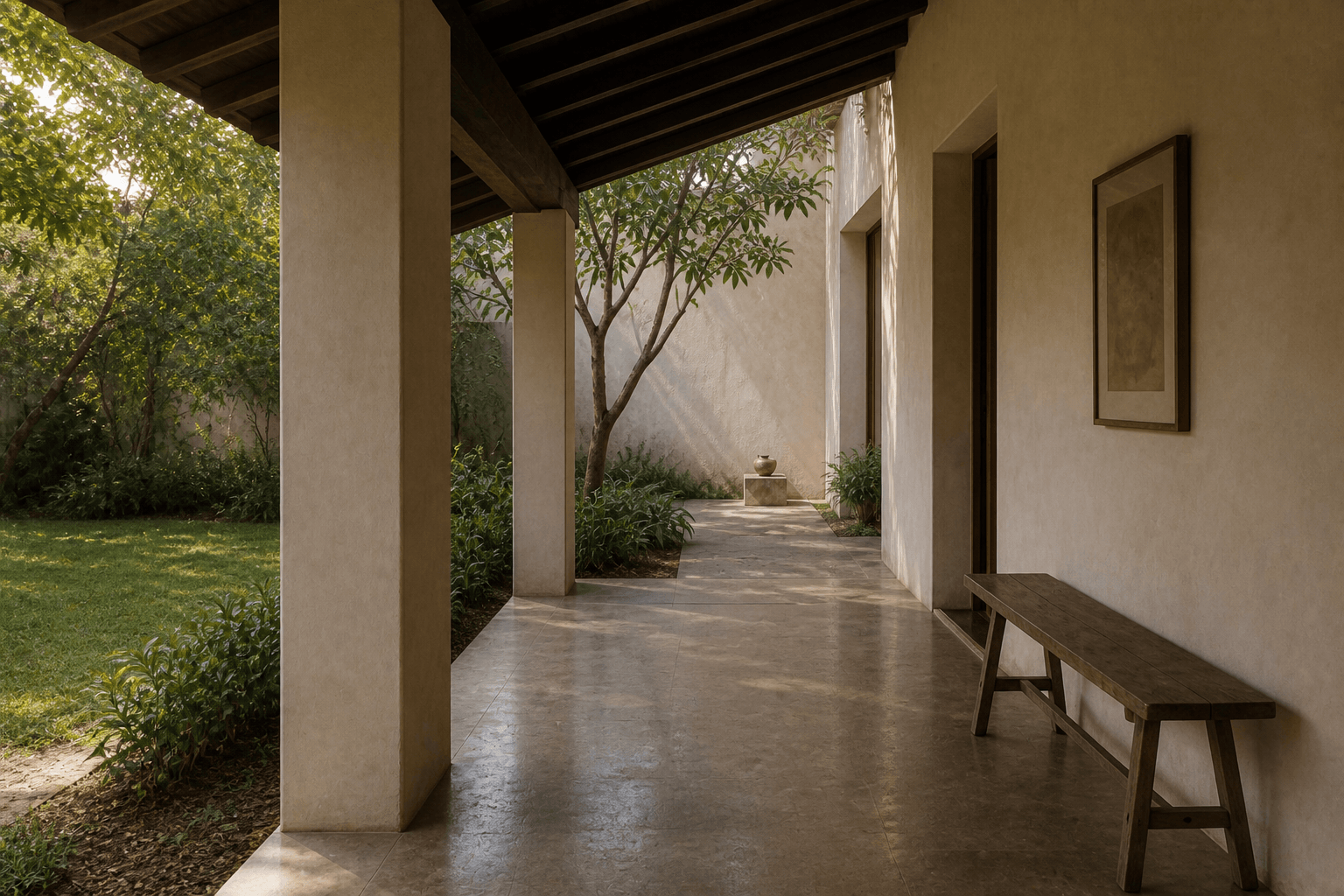
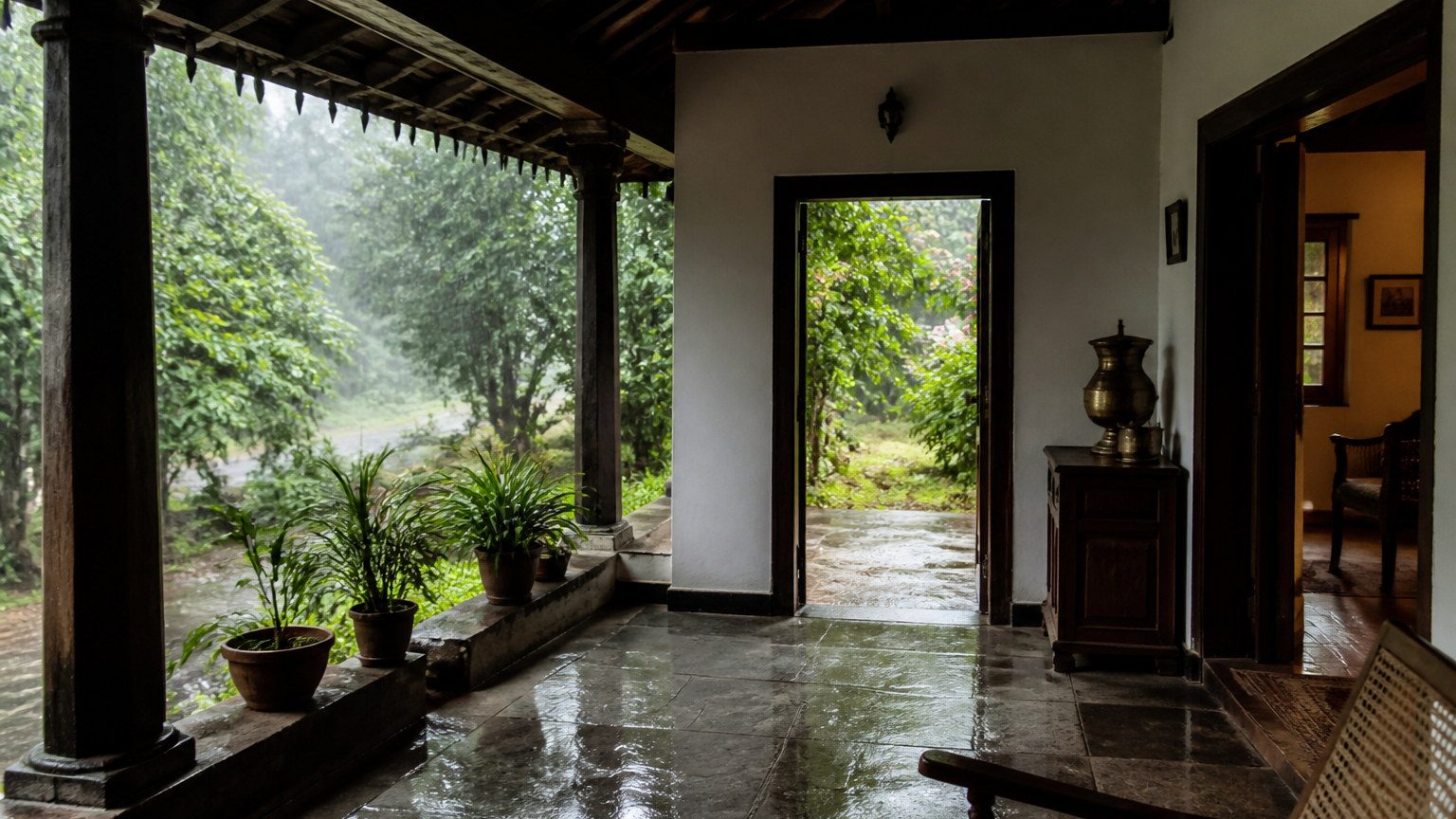
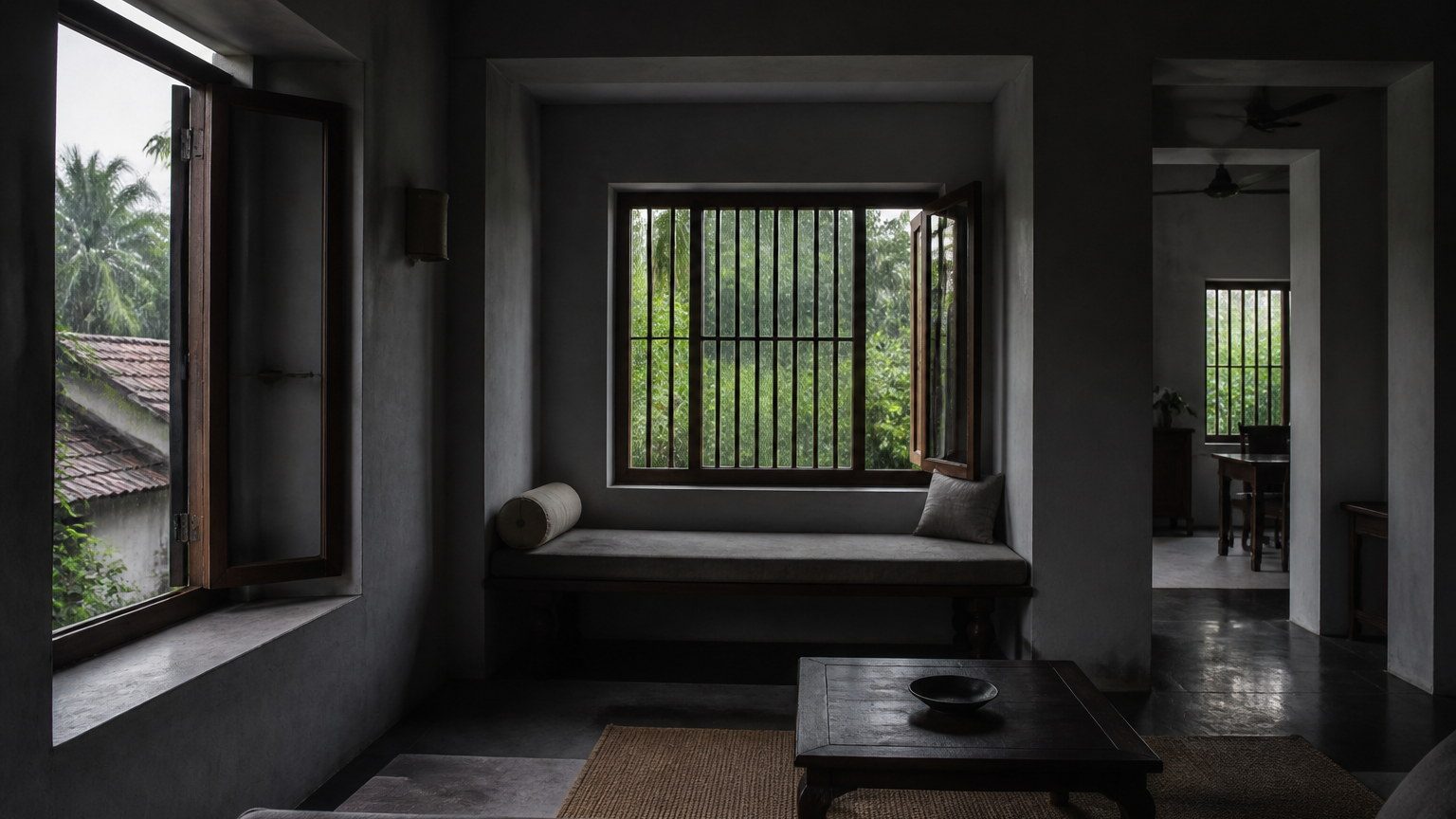
A deep overhang, a verandah, a change of floor, a place to leave water before it enters the room — these are interior decisions as much as they are architectural ones. A flush glass wall with nowhere for rain to go will bring the season indoors whether the furniture is “contemporary” or not.
Materials that can be wet and still be honest
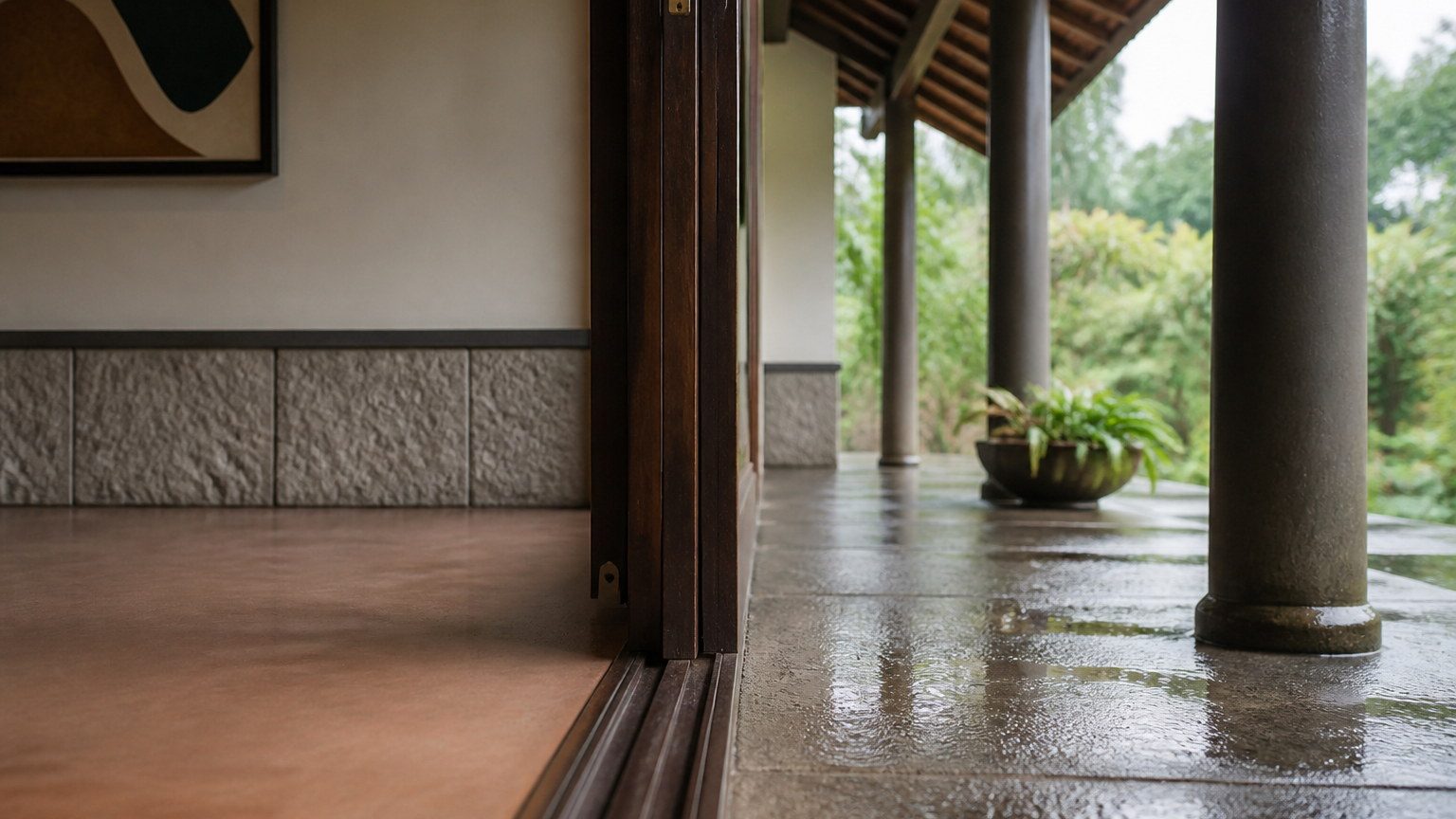
Stone dados, floors that can take water, timber that is specified and finished for humidity, walls that can dry — these are unfashionable sentences and necessary ones. Laminates that swell, untreated MDF near wet edges, and fabrics that cannot be dried will fail on a schedule the monsoon already knows.
Light in a grey afternoon
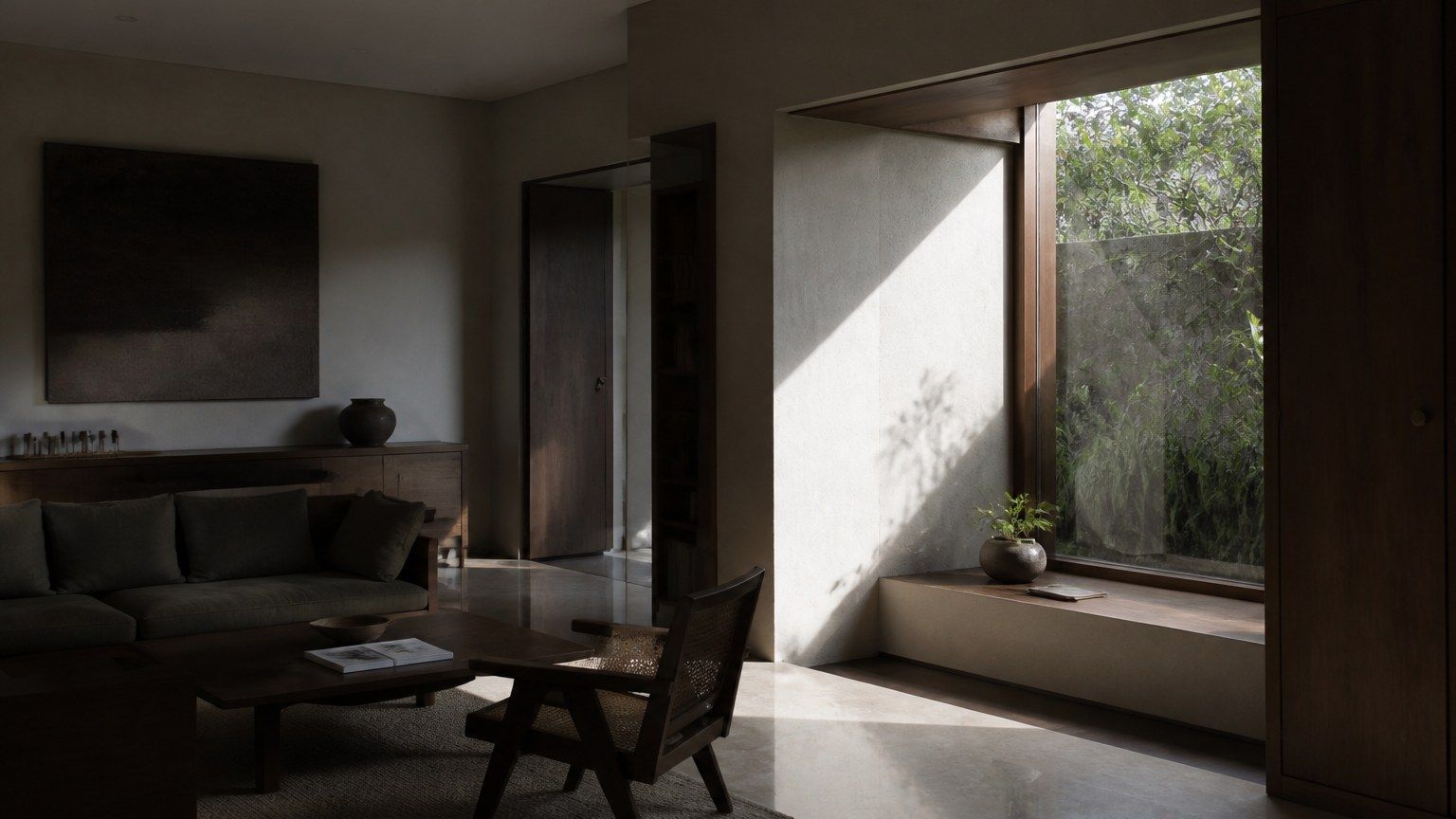
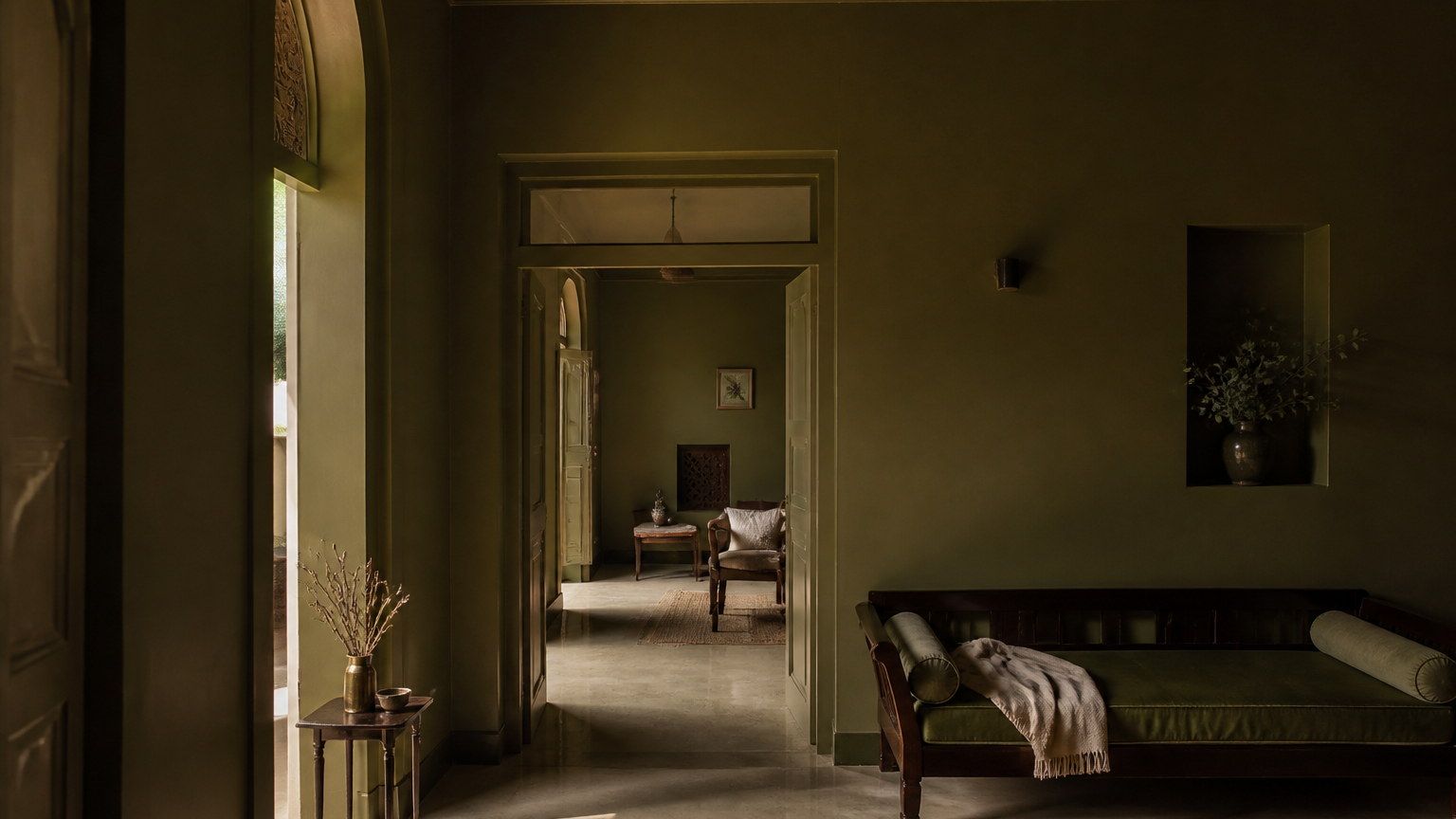
Monsoon light is humid, low and even. Colours shift. Rooms that were balanced in February can feel heavy in August. Designing only for hard sun produces interiors that have no register for the rest of the year.
Closing thought
A house that is designed around the monsoon is not a house that looks rainy. It is a house that can remain dry, quiet and usable while the weather does what it will do.
Climate is not a theme. It is a brief.