
In modern interior design, conversations often revolve around aesthetics, durability, finishes, and craftsmanship. Yet one critical subject continues to remain largely overlooked — material emissions.
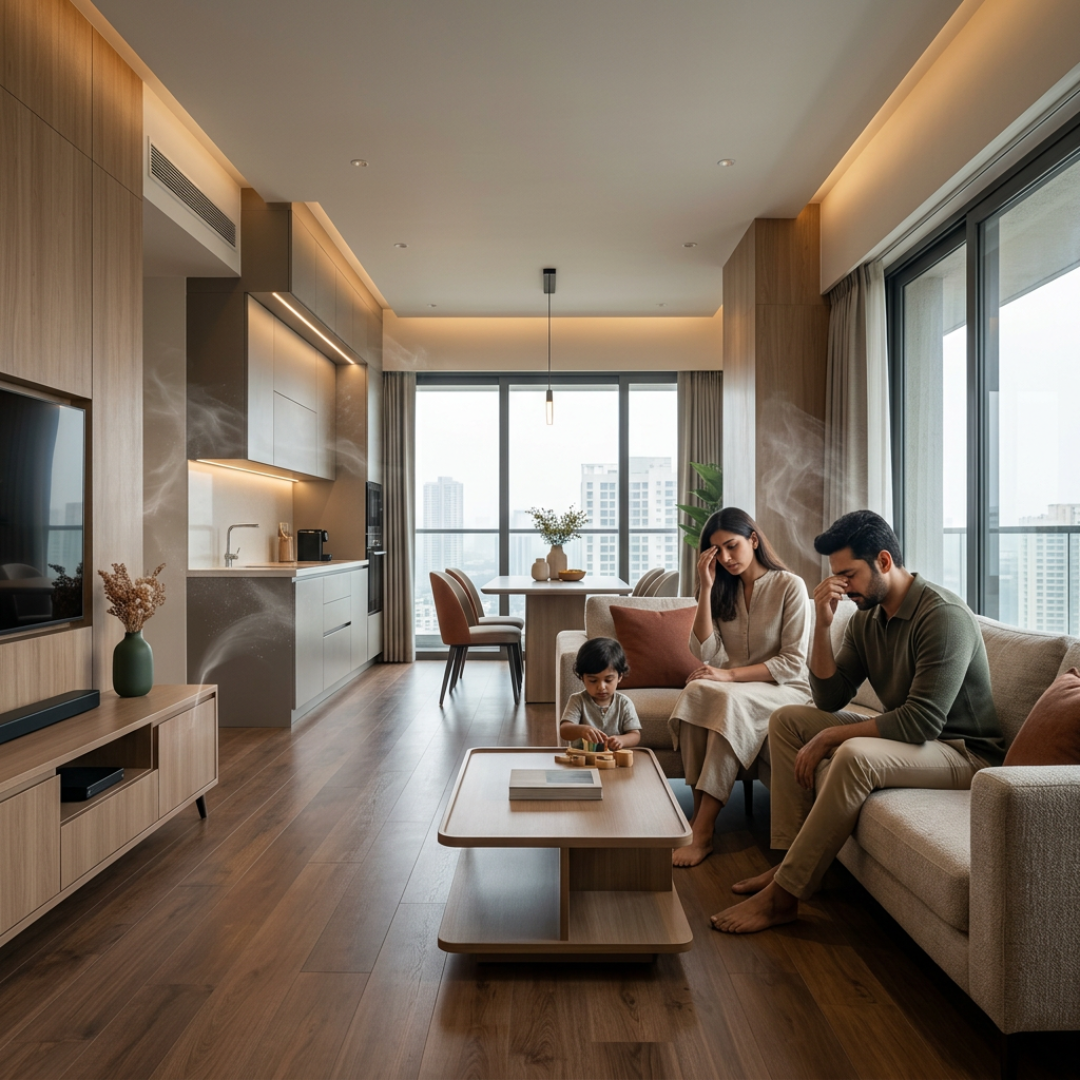
Plywood, MDF, particle board, laminates, and other engineered wood products form the foundation of contemporary interiors. While these materials offer flexibility and cost efficiency, many of them can release harmful chemicals into indoor spaces over time, particularly formaldehyde and other VOCs (Volatile Organic Compounds).
From a Blucap Interiors perspective, this is no longer merely a technical manufacturing concern — it is a matter of occupant wellness and responsible design.
Why Emissions Matter
Most engineered wood products are manufactured using chemical adhesives and resins. Lower-grade materials, especially those using urea-formaldehyde binders, may continue to “off-gas” long after installation.
Prolonged exposure to elevated formaldehyde levels has been associated with:
Respiratory irritation
Allergies and sensitivities
Headaches and fatigue
Poor indoor air quality
Long-term health concerns
In today’s urban environments — where homes and offices are increasingly air-conditioned and tightly sealed — indoor pollutants can accumulate more significantly than ever before.
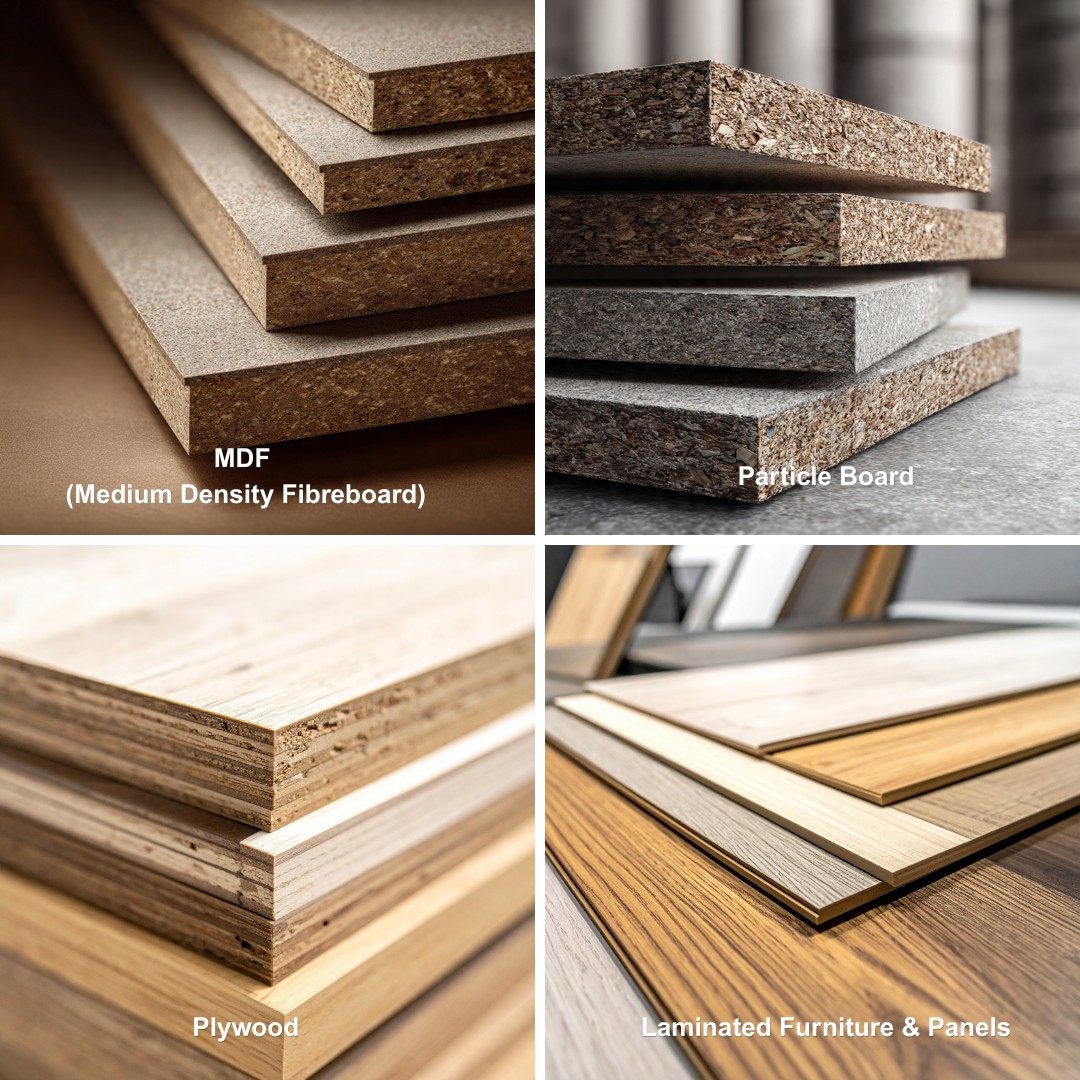
Materials Commonly Associated With Emissions
MDF (Medium Density Fibreboard): Often among the highest-emission engineered wood products due to resin content.
Particle Board: Common in modular furniture and budget interiors; emission levels vary significantly by quality.
Plywood: Emissions depend largely on the adhesive systems used during manufacturing.
Laminated Furniture & Panels: Surface finishes may appear premium while the substrate beneath may still emit harmful chemicals.
Understanding Global Emission Standards
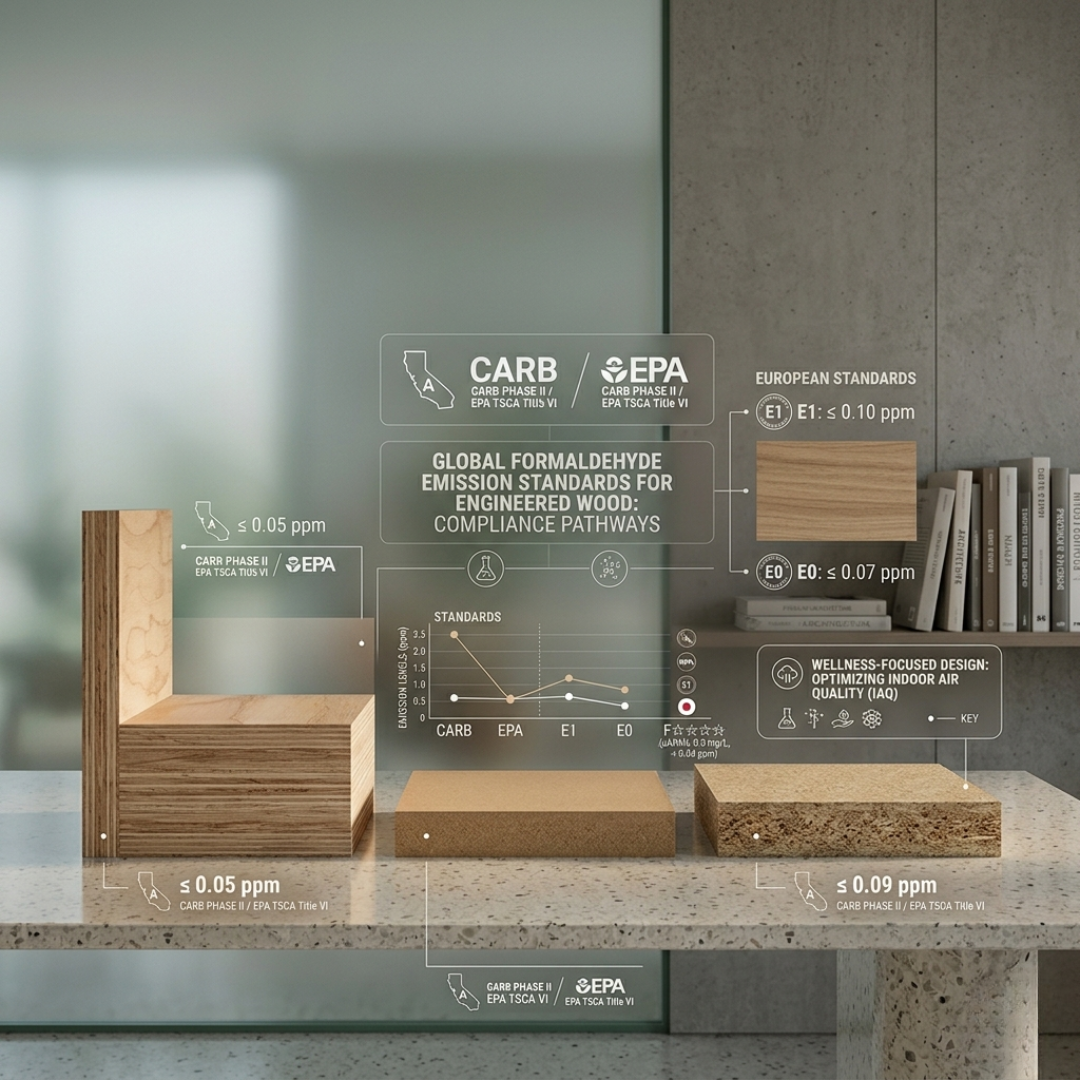
Globally, emission compliance is measured through internationally recognized standards that regulate formaldehyde release levels.
CARB Phase II (California Air Resources Board)
Considered one of the world’s strictest benchmarks, CARB Phase II regulates formaldehyde emissions in composite wood products.
Typical limits include:
Hardwood Plywood: 0.05 ppm
MDF: 0.11 ppm
Particle Board: 0.09 ppm
EPA TSCA Title VI (United States)
The U.S. EPA adopted standards aligned with CARB regulations, making low-emission compliance mandatory across the American market.
European E1 & E0 Standards
E1: Widely accepted European emission standard.
E0: Significantly lower emission category preferred for premium, wellness-focused interiors.
Today, high-end global projects increasingly specify low-emission or no-added-formaldehyde materials as part of their design standards.
The Indian Context
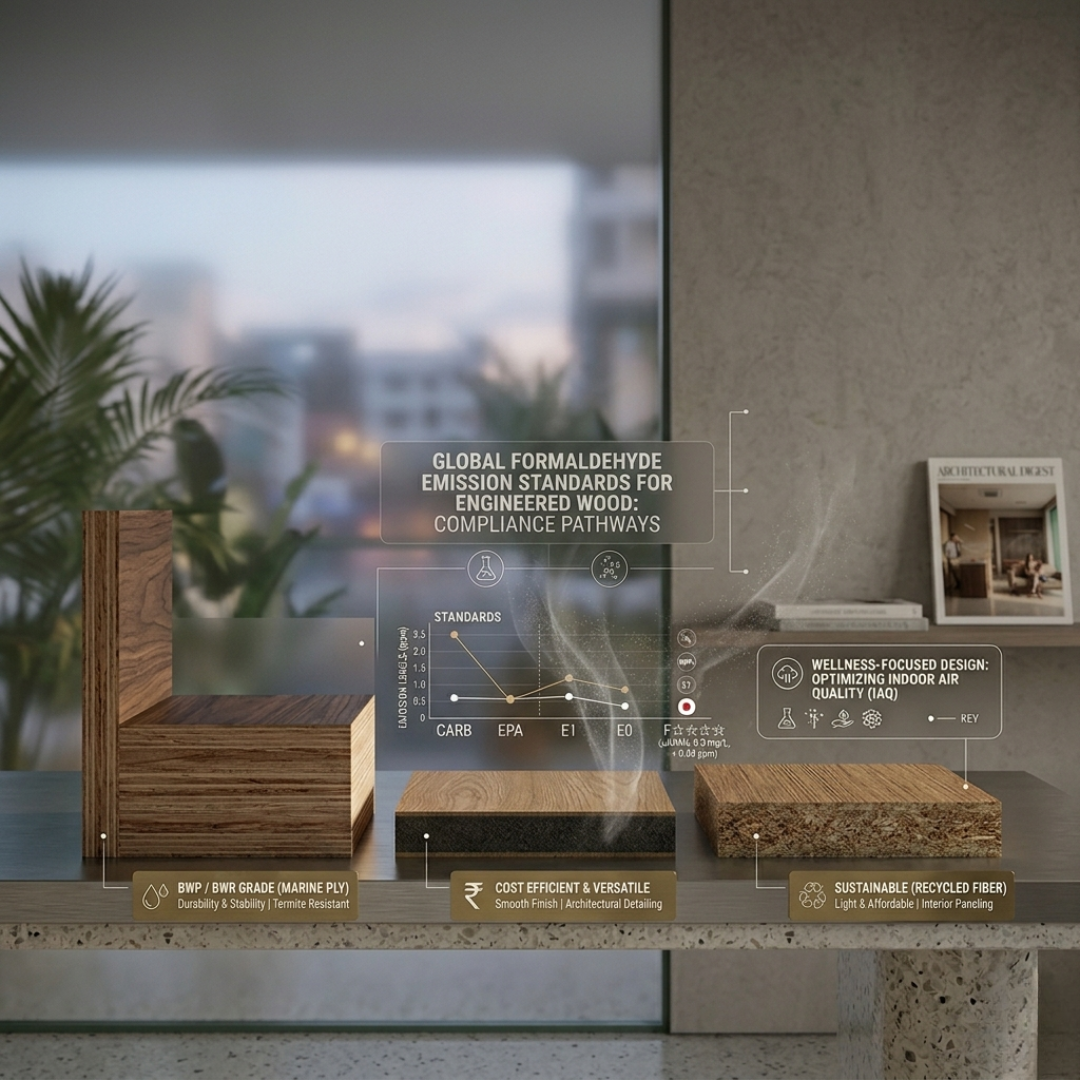
In India, discussions around plywood and panel materials are still heavily centered on:
BWP/BWR grades
Durability
Termite resistance
Cost efficiency
Very rarely do conversations address indoor air quality or material emissions.
Blucap Interiors believe that as interior designers, consultants, and homeowners become more aware of wellness-centric spaces, this conversation can no longer remain secondary.
What Designers Should Be Asking Suppliers
A more informed material selection process should include questions such as:
Is the material CARB Phase II certified?
Is it TSCA Title VI compliant?
What is its emission grade — E1 or E0?
Are third-party test reports available?
Are low-emission adhesives being used?
These questions are increasingly becoming standard practice in globally aligned interior projects.

The Future of Premium Interiors
True luxury today is no longer defined only by visual sophistication. It is equally defined by:
Health-conscious material selection
Indoor air quality
Environmental responsibility
Transparency in specifications
Because great interiors should not only look exceptional — they should also support healthier living environments for the people who inhabit them.

 Chat with us now!
