
Trust is not declared in client-facing environments. It is absorbed — through proportion, silence, weight, and light. Long before a conversation begins, a space has already shaped perception. In our practice, we have come to understand that credibility is not a branding exercise; it is a spatial condition.
Client-facing interiors carry a subtle responsibility. They must communicate authority without intimidation, refinement without excess, and privacy without isolation. The success of such environments lies in what cannot be easily seen — the invisible architecture that quietly reassures.
Thresholds That Recalibrate Power
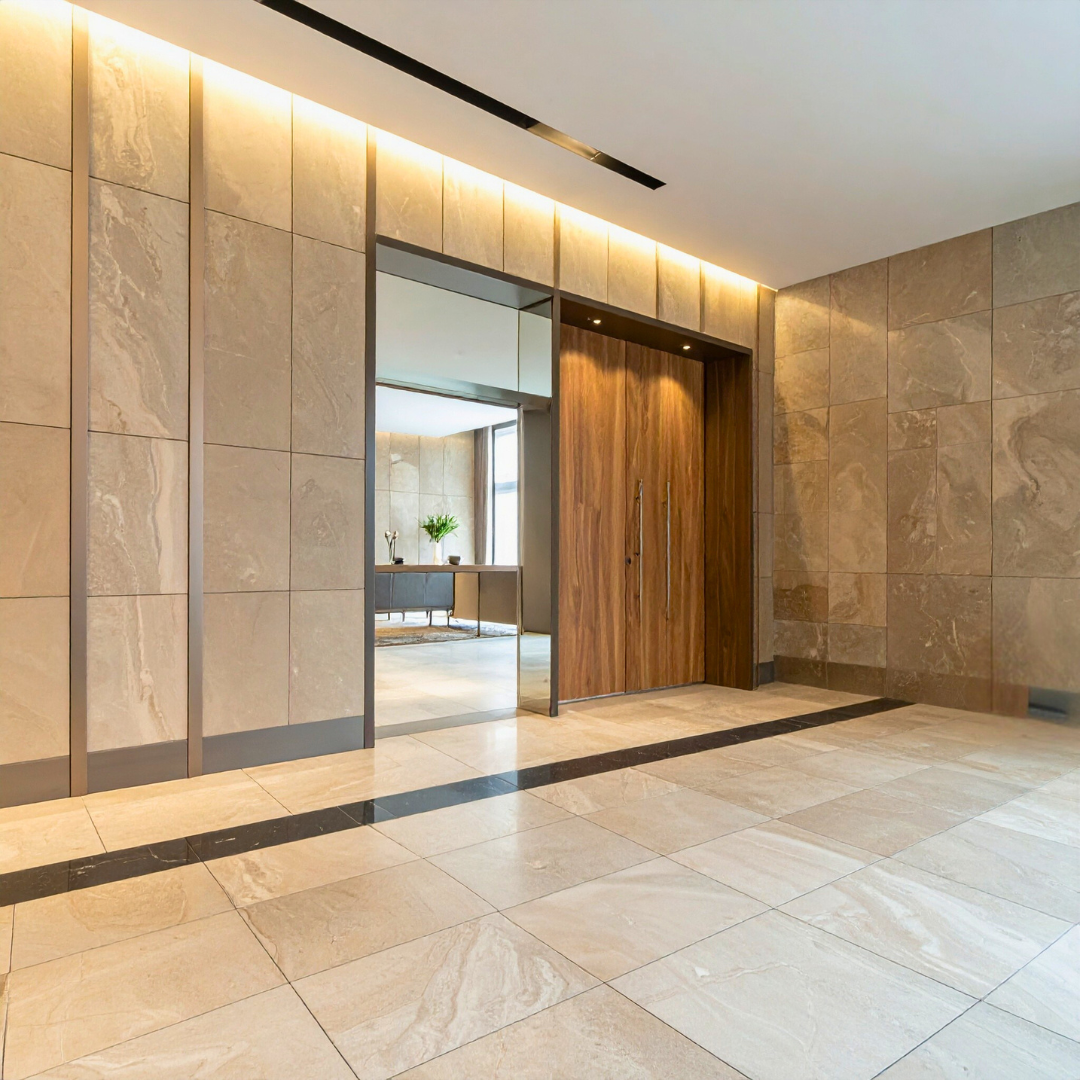
At Blucap Interiors, we approach entry sequences as psychological transitions rather than decorative moments.
The threshold is where hierarchy is first felt. A slightly compressed vestibule that opens into a composed reception volume recalibrates power dynamics. Subtle shifts in material underfoot slow the stride just enough to settle the mind. We carefully avoid theatrical grandeur at the point of arrival; overt spectacle often signals insecurity rather than strength.
Authority, when spatially balanced, becomes calming instead of overwhelming. A disciplined entry sequence dissolves defensiveness and establishes quiet confidence — the first layer of trust.
Material Integrity as Ethical Language
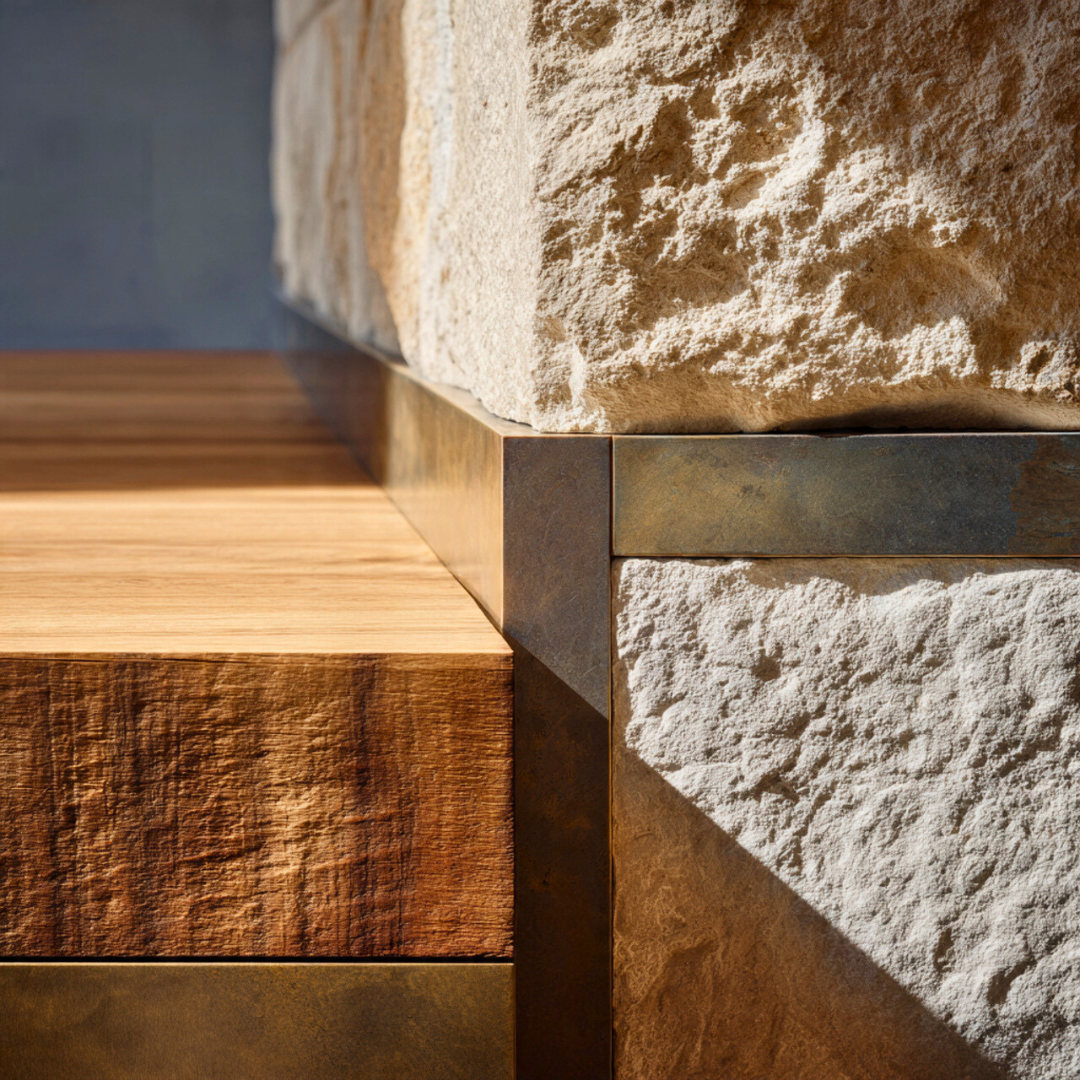
Within the design philosophy of Blucap Interiors, materials are chosen as much for their moral clarity as for their beauty.
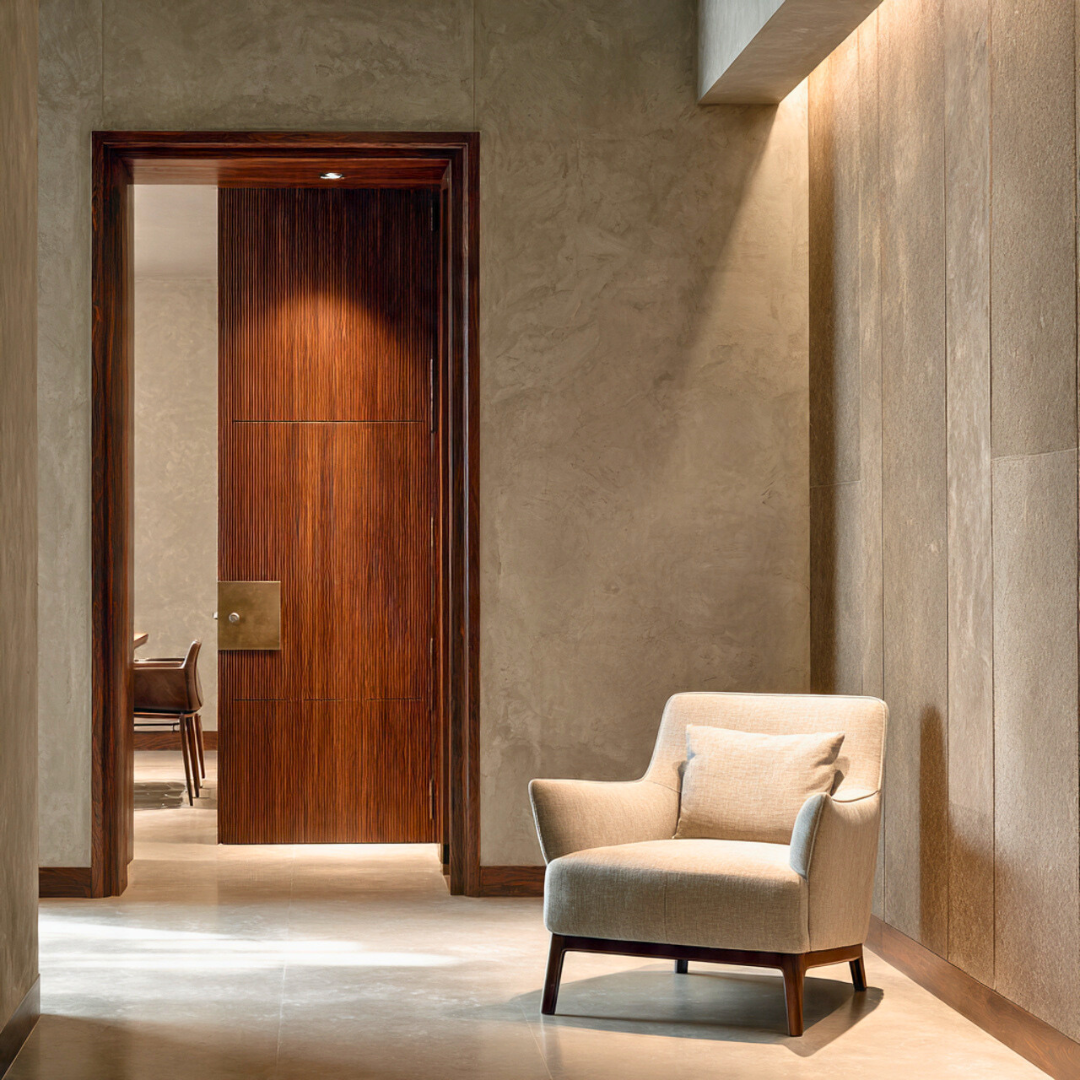
Visitors may not consciously evaluate finishes, yet they instinctively detect authenticity. Surfaces that imitate something grander than they are create subconscious dissonance. Instead, we allow timber to reveal its grain, metal to age with dignity, and stone to express its depth without concealment.
When materials behave truthfully, the environment feels principled. Integrity in matter translates into integrity in perception. In client-facing spaces, that perception can determine whether a brand feels dependable or performative.
Geometry That Encourages Candor
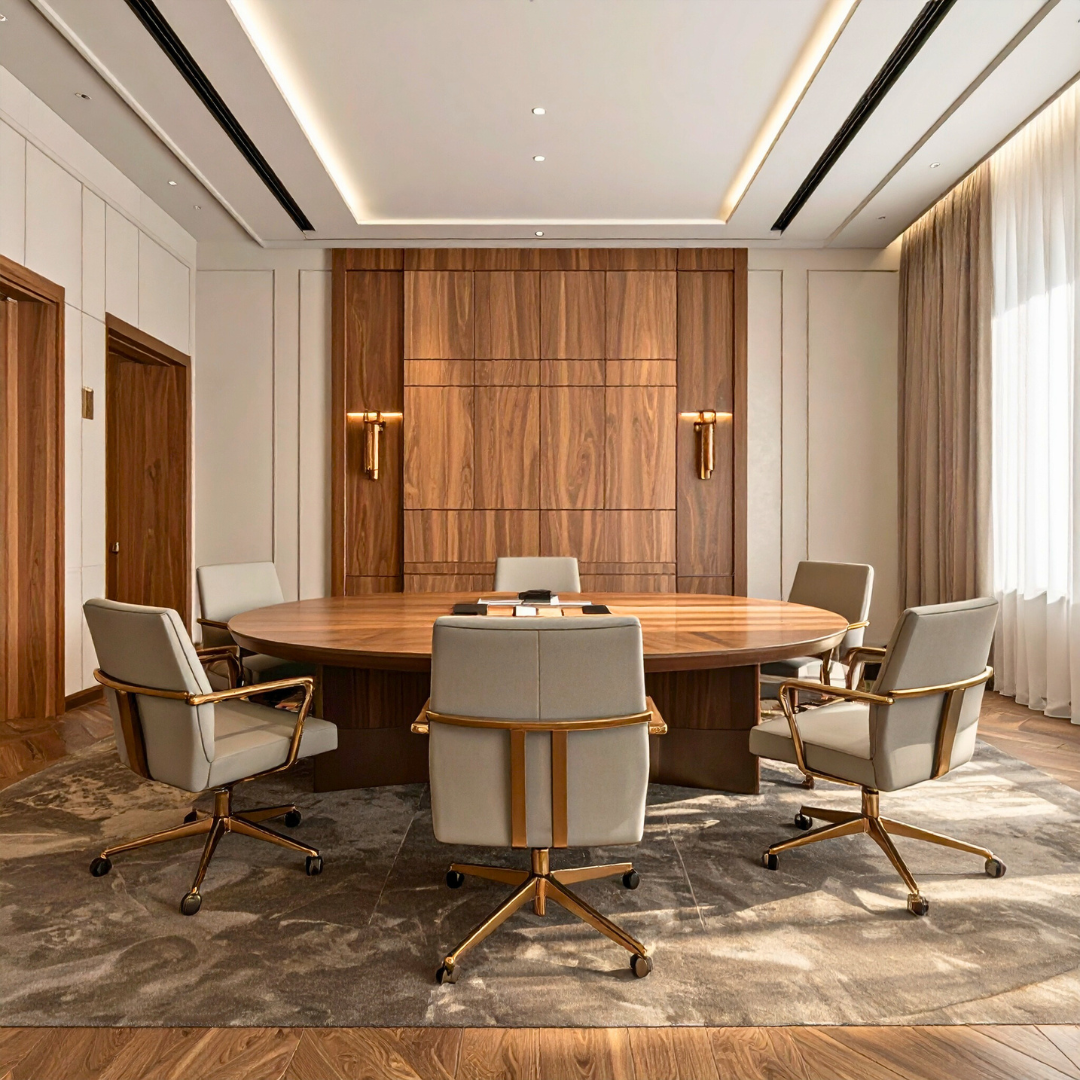
The spatial planning approach at Blucap Interiors treats geometry as a psychological instrument.
A table placed directly opposite a visitor can feel confrontational. A 90-degree conversational angle invites dialogue. Softened radii in a boardroom diffuse tension without announcing their intention. Even eye-level alignment between seated individuals subtly influences openness.
Hierarchy must exist in professional settings, yet it need not be adversarial. When proportions are thoughtfully balanced, posture relaxes. Conversations become less guarded. Trust thrives in spaces where geometry aligns people rather than positions them against each other.
Acoustic Privacy as Invisible Assurance
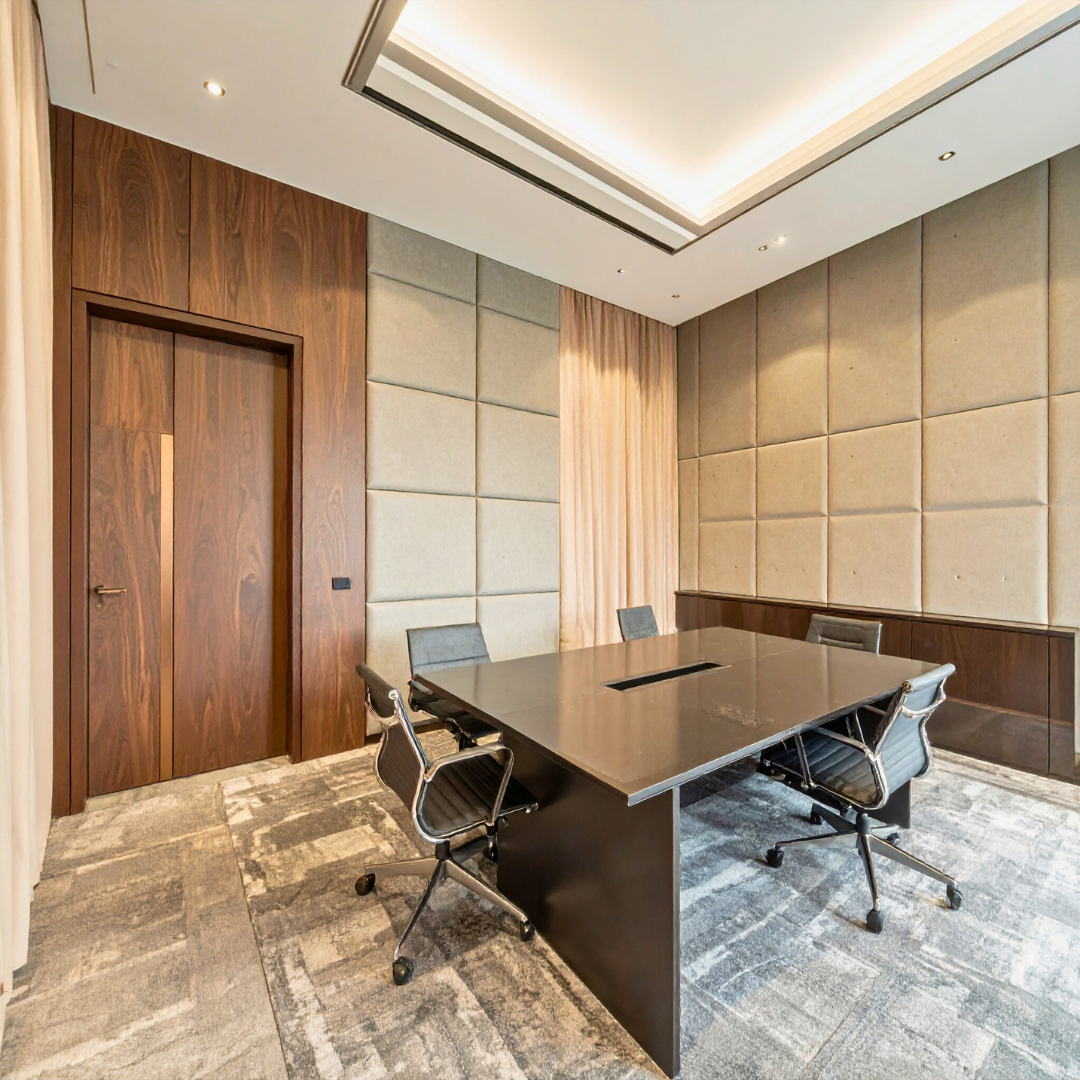
In environments designed by Blucap Interiors, acoustics are never secondary — they are foundational to credibility.
True confidentiality is not achieved through visual barriers alone. It resides in layered acoustic buffering: absorptive materials discreetly integrated behind refined surfaces, transitional zones that prevent sound spill, textures that fragment echo. These elements operate silently, yet their absence would be immediately felt.
When clients sense that their conversations are contained without visible isolation, psychological safety emerges. And safety is the bedrock of honest dialogue.
Light That Reveals Without Exposing
Lighting strategies developed at Blucap Interiors are calibrated to respect human presence.
Overly bright, flat illumination feels interrogative. Excessively dramatic spotlighting feels theatrical. We favor layered light — ambient glow for comfort, directional accents for clarity, and controlled shadow for depth. Facial rendering is carefully considered, particularly in advisory and executive spaces where discussions may extend for hours.
Light that reveals without exposing allows individuals to feel seen but not scrutinized. In that balance, openness becomes effortless.
Continuity as a Promise
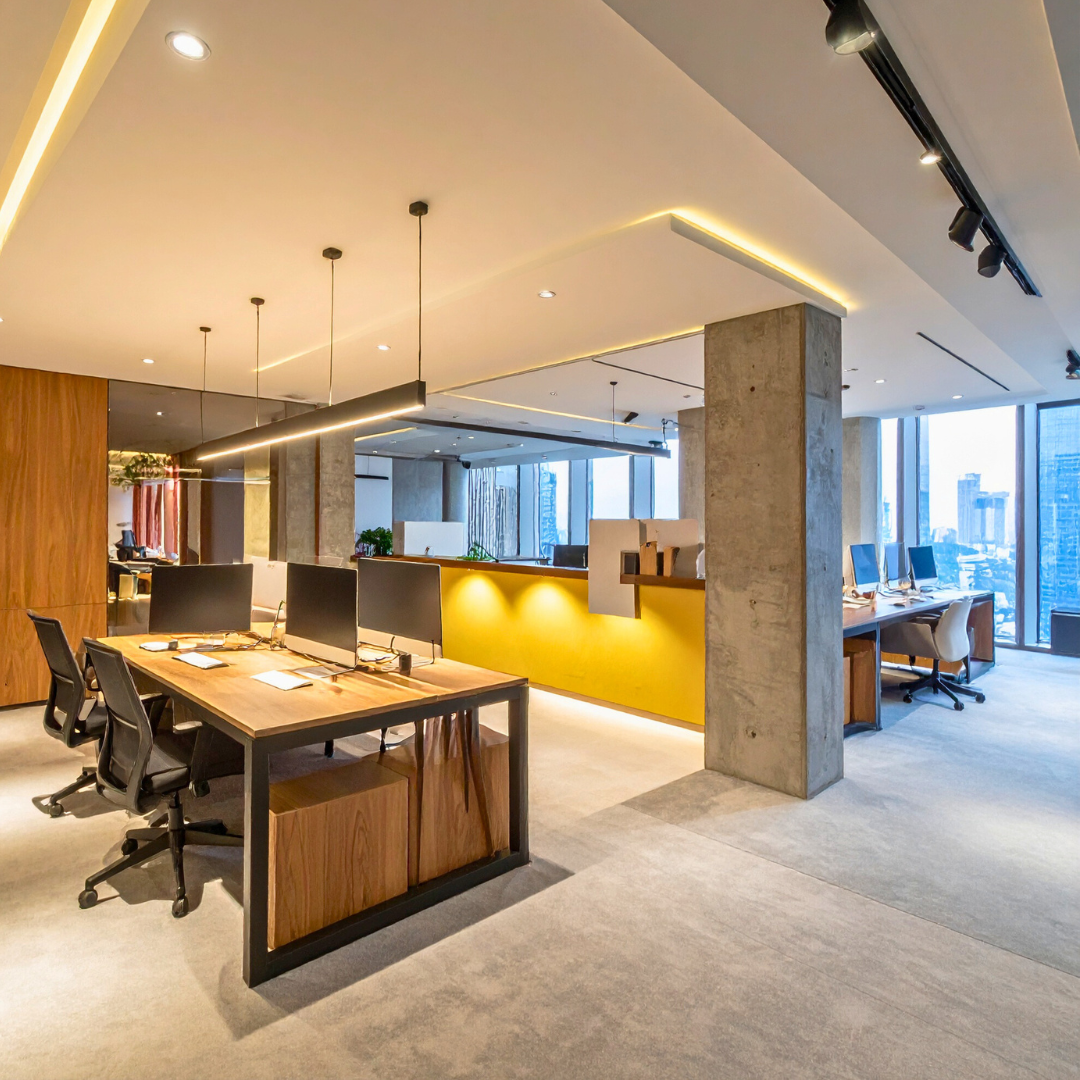
Spatial continuity is orchestrated with precision at Blucap Interiors, because trust deepens through coherence.
From the arrival experience to the most private meeting suite, every transition must feel intentional. A material introduced at the entrance may reappear as a refined detail elsewhere. Proportions repeat subtly. Lighting temperatures remain consistent across zones. This rhythm creates a sense of deliberation rather than assembly.
When visitors sense that every detail belongs to a larger narrative, reliability is inferred. Reliability becomes confidence.
The Invisible Agreement
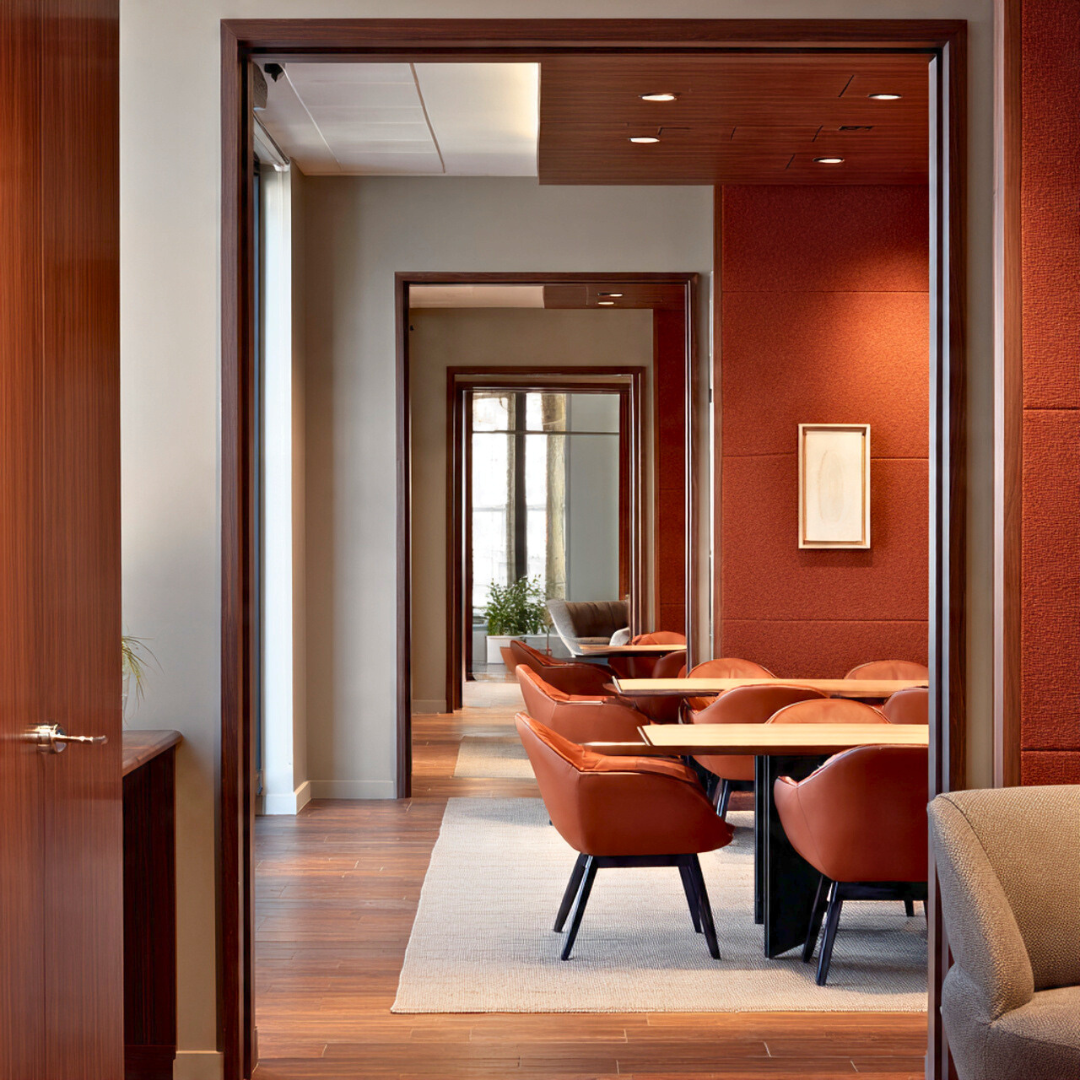
Every client-facing environment shaped by Blucap Interiors rests on an unspoken agreement between space and occupant.
It lives in the reassuring weight of a door closing softly.
In the absence of glare during a critical negotiation.
In the exact comfort of an armrest during a long discussion.
In the subtle containment of confidential conversation.
These details do not announce themselves. They accumulate quietly, building assurance layer by layer.
The most powerful architecture is rarely the most visible. It is the architecture that earns trust before a single word is spoken — and sustains it long after the meeting ends.


 Chat with us now!
