

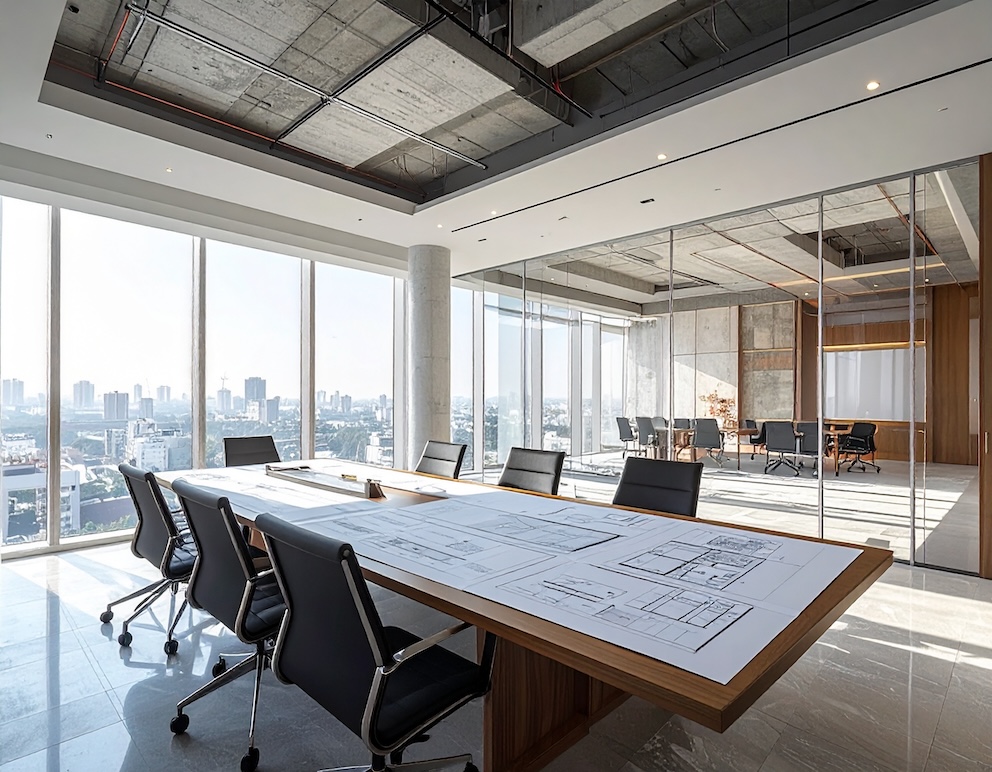
Office interior costs in Bangalore are influenced by far more than furniture, finishes, and square footage. In 2026, organizations are increasingly evaluating workplace investments through the lens of productivity, employee experience, operational efficiency, and brand positioning. The focus has shifted from minimizing fit-out costs to maximizing long-term workplace value.
1. Workplace Density and Space Utilization
One of the most significant cost drivers is how efficiently a workplace is planned. Activity-based layouts, shared workstations, and flexible collaboration zones can substantially influence the overall fit-out investment while improving space utilization.
2. Building Infrastructure Compatibility
Office interior costs often vary based on the readiness of the base building. Existing HVAC systems, electrical capacity, fire safety requirements, and ceiling conditions can significantly impact project budgets before interior finishes are even considered.
3. Technology Integration Requirements
Modern workplaces increasingly require integrated technology ecosystems. Video conferencing infrastructure, smart meeting rooms, occupancy analytics, access control systems, and workplace management platforms contribute substantially to overall project costs.
4. Brand-Led Design Elements
Organizations are investing more in branded workplace environments. Custom reception areas, feature walls, experiential zones, and bespoke design details help strengthen corporate identity while influencing project expenditure.
5. Lifecycle Cost Considerations
Forward-thinking businesses are evaluating materials and systems based on durability, maintenance requirements, and long-term operational costs rather than initial procurement expenses alone.
Looking Ahead
The most successful office projects balance budget, functionality, and future adaptability. Organizations that understand the factors influencing office interior costs in Bangalore are better positioned to create workplaces that support business growth, employee engagement, and long-term value. In today's market, workplace investment is increasingly viewed as a strategic business decision rather than a construction expense.
 Chat with us now!
