

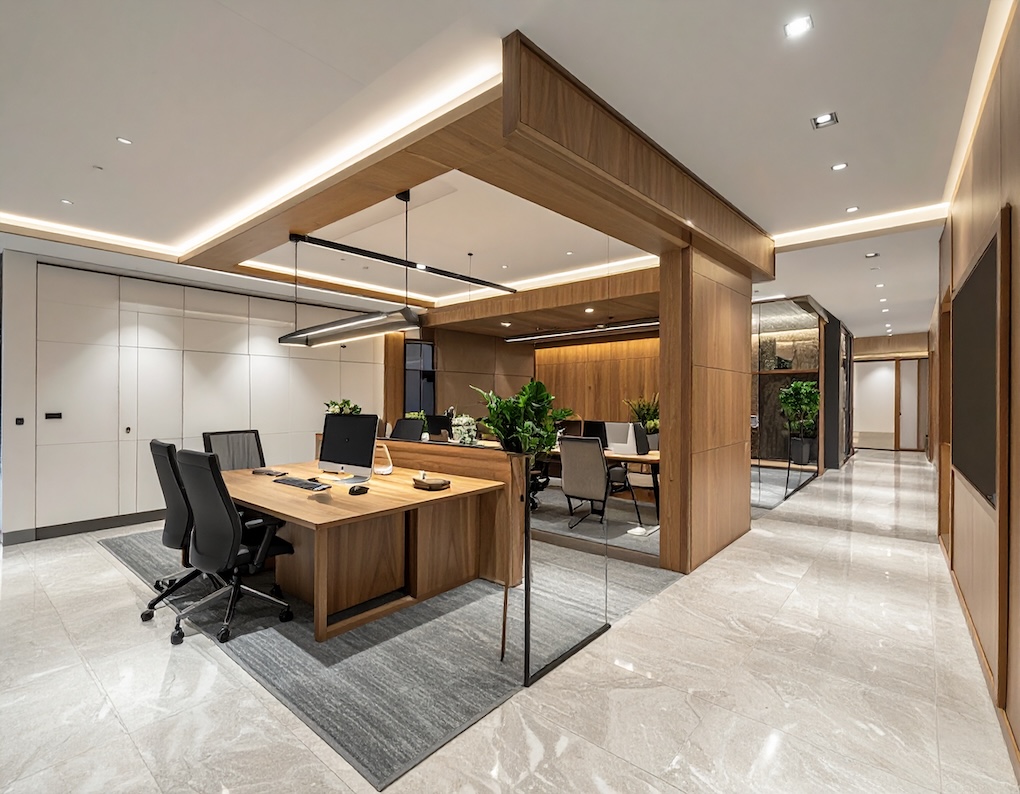
Hybrid work is no longer a temporary workplace model—it has become a fundamental driver of office design. In 2026, organizations are moving beyond simple desk-sharing concepts and creating environments that support varying work modes, improve space utilization, and enhance employee experience. The focus is shifting from fixed workstations to intelligent, purpose-driven workplace ecosystems.
1. Neighborhood-Based Planning
Rather than assigning desks by department, organizations are creating team neighborhoods that provide employees with a familiar home base while allowing flexibility. These zones strengthen collaboration, improve team identity, and support changing attendance patterns.
2. Destination-Oriented Collaboration Spaces
Employees increasingly come to the office for activities that cannot be replicated virtually. Strategy rooms, innovation hubs, project war rooms, and client collaboration suites are becoming key destinations that encourage meaningful in-person engagement.
3. Demand-Responsive Space Allocation
Advanced occupancy analytics are enabling workplaces to adapt space allocation based on actual usage patterns. Underutilized areas can be reconfigured quickly, ensuring offices remain efficient and aligned with evolving workforce behaviors.
4. Seamless Digital-Physical Integration
Hybrid offices are being designed around technology-enabled experiences. Acoustically optimized meeting rooms, integrated video collaboration systems, and digital booking platforms help create a consistent experience for both remote and in-office employees.
5. Choice-Based Work Settings
Modern workplaces increasingly offer a spectrum of environments—from focus pods and quiet libraries to social lounges and collaborative studios. This allows employees to select spaces that best support their tasks, improving productivity and workplace satisfaction.
Looking Ahead
The most successful hybrid workplaces balance flexibility, collaboration, and operational efficiency. Organizations that invest in intelligent office layout strategies are creating environments that support employee engagement, optimize real estate performance, and strengthen long-term business resilience. Hybrid workplace design is no longer about where people work—it is about enabling how they work best.
 Chat with us now!
