

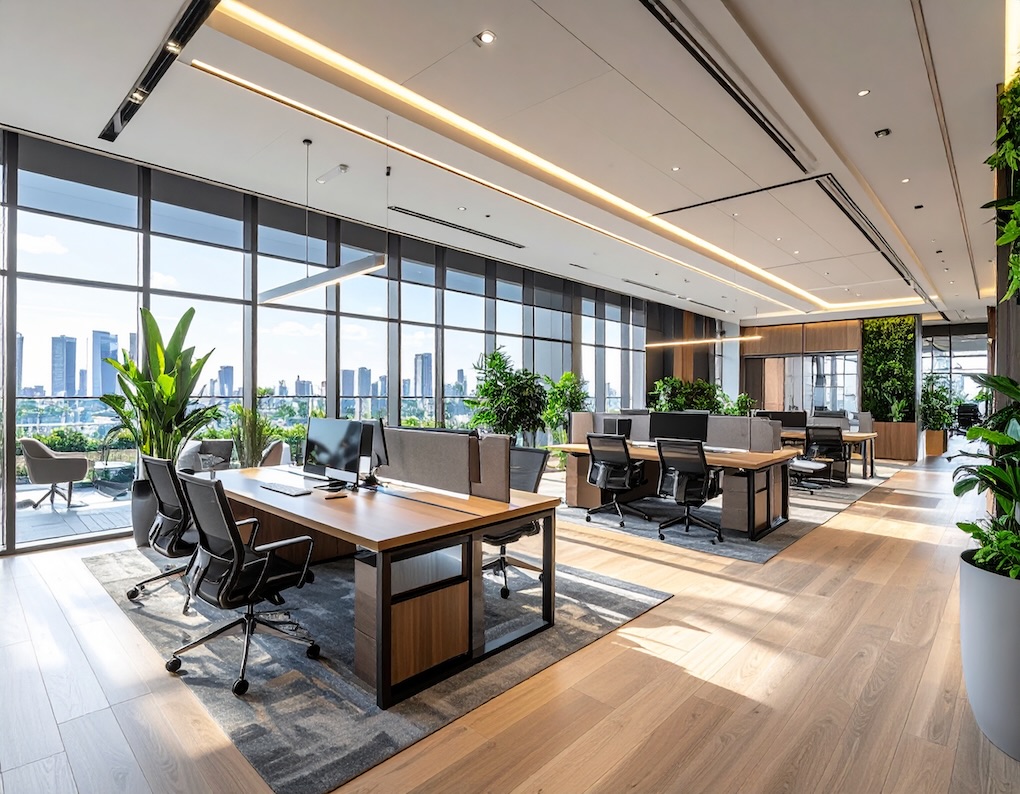
Productivity is no longer viewed solely as an operational challenge. In 2026, leading organizations recognize that workplace design directly impacts focus, collaboration, employee engagement, and business performance. The most effective offices are designed to actively support how people think, work, and perform.
1. Cognitive Zoning for Different Modes of Work
Modern workplaces are moving beyond uniform layouts. Dedicated zones for focused work, collaboration, learning, and informal interaction help employees work more effectively while reducing cognitive fatigue throughout the day.
2. Attention-Optimized Acoustic Design
Productive offices are increasingly prioritizing acoustic performance. Sound-absorbing materials, meeting pods, and carefully planned layouts help minimize distractions and support deeper concentration.
3. Designing for Visual Recovery
Workspaces are incorporating areas that allow employees to mentally recharge. Natural views, calming materials, and low-stimulation environments help improve focus and reduce mental fatigue.
4. Friction-Free Workplace Navigation
Efficient workplace planning reduces everyday obstacles. Well-designed circulation paths, intuitive layouts, and strategic team adjacencies help improve workflow and collaboration.
5. Data-Driven Workplace Performance
Organizations are increasingly using workplace analytics to guide design decisions. Space utilization data and employee behavior insights help create environments that continuously support productivity and business goals.
Looking Ahead
The future of productive workplace design goes beyond aesthetics. Organizations are investing in environments that enhance focus, support employee wellbeing, and improve overall workplace performance. The most successful offices will be those that seamlessly align people, processes, and space.
 Chat with us now!
